
DOMINANT ANGLE
Rome is relaying the toll of the Tibet earthquake, systematically attributing it to Chinese state media, and relying on the American Geological Institute to locate the epicentre.
Dominant angle identified — does not reflect unanimity of this country’s media
KEY POINTS
- 01
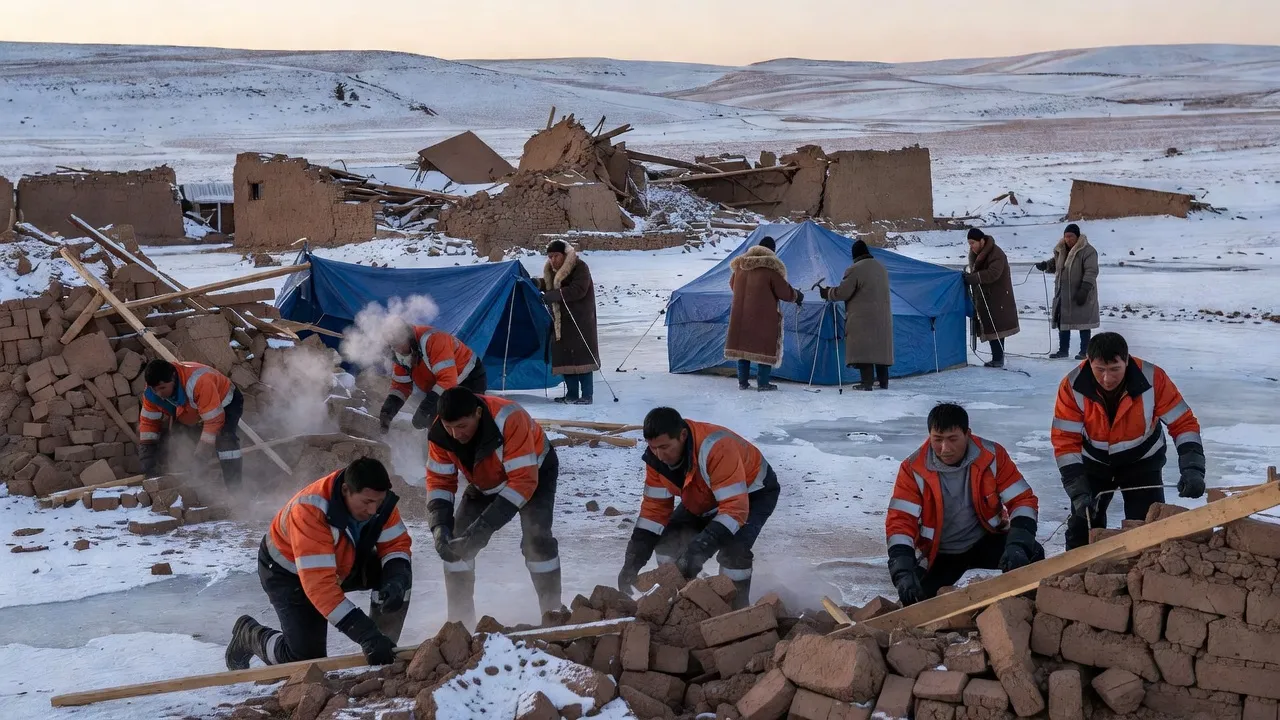
The 7.0-magnitude earthquake killed at least 16 people and injured 46, including 11 seriously, according to state television CCTV.
- 02
339 buildings collapsed or were damaged; more than 300 police officers and 347 firefighters were deployed, according to Xinhua.
- 03
The USGS located the epicenter about 190 km east-northeast of Nagqu and 390 km northeast of Lhasa, at a depth of 10 km.
ANALYSIS
Rome, October 23, 2026. The Italian press is treating the Tibet earthquake as a wire report, built on official Chinese sources. ANSA writes that a strong earthquake caused "at least 16 deaths and 46 injuries" in the Chinese region of Tibet, "according to state media citing local authorities." The quake, with a magnitude of 7.0, occurred on Thursday, October 22 at 22:33, according to Adnkronos, and caused the collapse of more than 300 homes.
The detailed toll is based on state television CCTV: 46 injured, including 11 in serious condition, and 339 buildings collapsed or damaged. ANSA also relays Xinhua, according to which officials are still assessing the damage and rescue operations are underway. More than 300 police officers have been dispatched to the scene and the regional fire department has mobilized 347 units. CCTV announced the activation of a level III emergency plan.
The location, on the other hand, comes from a foreign source. According to the American Geological Institute, the epicenter is located in a mountainous area, about 190 kilometers east-northeast of Nagqu and 390 kilometers northeast of Lhasa, at a depth of about 10 kilometers. ANSA places it in the municipality of Maru, in the county of Baqen. A local official quoted by Xinhua said he distinctly felt the quake in his offices, where cracks appeared in the walls; the agency also reports power and telecommunications outages in the county seat.
Adnkronos adds geological insight by citing CNN: China already experiences strong earthquakes in its southwestern regions, where the Eurasian plate meets the Indian plate, a collision that gave rise to the Himalayas and the Tibetan Plateau. The media outlet specifies that this earthquake is the strongest to hit China since January 2024, according to the CENC.
Libero Quotidiano picks up the story in a brief video, mentioning "door-to-door" rescue operations in Xizang, the Chinese name for Tibet. Italian articles do not mention Xi Jinping's instructions, Beijing's emergency aid, or the cold conditions: attention is focused on the toll and the origin of each piece of data, whether from official Chinese or American sources.