Common ground and differences in coverage across the media analysed.
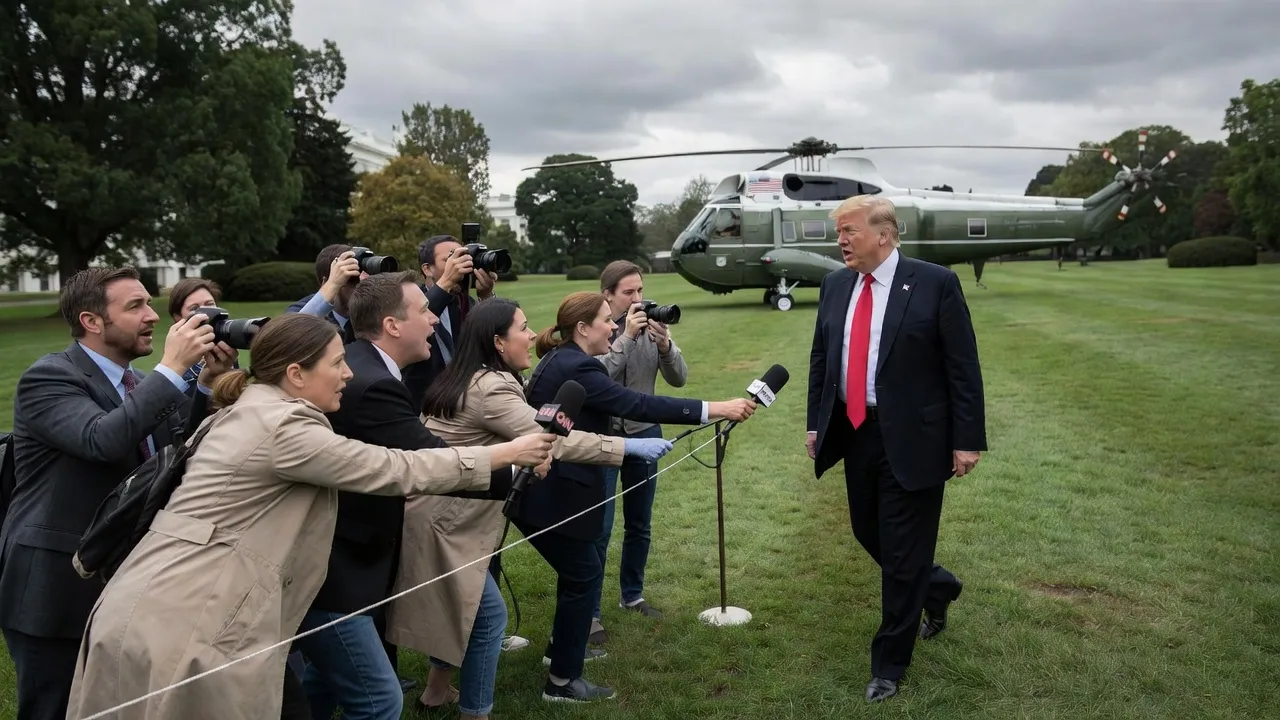
Donald Trump announced on Saturday, September 26, that he had rejected the Iranian proposal to reopen the Strait of Hormuz, stating to the press, 'I reject their proposal,' a rejection reported by nearly all of the monitored sources, with the notable exception of Saudi press, which did not address this exchange.
The Iranian plan, presented by Minister Abbas Araghchi and transmitted through Qatari mediators, provided for seven days of cessation of hostilities followed by the reopening of the Strait of Hormuz, in exchange for the lifting of the US naval blockade, the suspension of oil sanctions, and the unfreezing of Iranian assets estimated at at least $12 billion.
On the question of what factor had the most weight on the moment chosen by Trump to reject the plan, one part of the coverage highlights the calendar of the November midterm elections, while another prioritizes the economic pressure exerted by the naval blockade on Iranian oil revenues.
On the question of what the maintenance of the strait blockade implies, one part of the coverage first retains the impact on global energy prices and oil traffic, while another highlights the regional security risks, between the Houthi attack on Riyadh the same weekend, the warning from the Revolutionary Guards and the Saudi call for freedom of navigation.
Coverage aligned with this reading
Coverage that diverges
On the question of what the exchange of statements between Washington and Tehran translates, one part of the coverage sees it as a demonstration of American strength, while another highlights Tehran's denunciation of American messages deemed inconsistent.
Coverage aligned with this reading
Coverage that diverges
This grouping describes the publications analysed, not the position of these countries’ populations or of their governments.
What the coverage of each country leaves aside, while others put it forward.
Saudi Arabia
Hungary
Australia
Preview: 3 of 22 media perspectives. Syntheses of the media analysed — not direct quotations. Method & limitations
Accra is measuring the impact of the American refusal on global oil markets, as the Strait of Ormuz remains closed and economic sanctions on Iran intensify.
2 sources · View sources
Buenos Aires sees Trump's refusal as a maneuver timed to the US electoral calendar rather than the substance of the Iranian proposal on the Strait of Hormuz.
2 sources · View sources
Canberra sees the naval blockade as the real lever of the crisis, while the Red Sea is also heating up near Riyadh.
4 sources · View sources
DOMINANT ANGLE
Accra is measuring the impact of the American refusal on global oil markets, as the Strait of Ormuz remains closed and economic sanctions on Iran intensify.
ANALYSIS
Accra, September 27, 2026.
DOMINANT ANGLE
Buenos Aires sees Trump's refusal as a maneuver timed to the US electoral calendar rather than the substance of the Iranian proposal on the Strait of Hormuz.
ANALYSIS
Buenos Aires, September 27, 2026.
DOMINANT ANGLE
Canberra sees the naval blockade as the real lever of the crisis, while the Red Sea is also heating up near Riyadh.
ANALYSIS
Canberra, 27 September 2026.
DOMINANT ANGLE
Budapest sees the renaming of the Strait of Hormuz to "Trump-szoros" as a staged event that covers up a refusal, the justification for which, as hammered out by Washington, remains above all economic: oil and the financial weakening of Tehran.
ANALYSIS
Budapest, September 27, 2026.
DOMINANT ANGLE
Brasília is mainly concerned about the threat of a resumption of American bombings after the November midterm elections, more than the simple rejection of the seven-day plan announced on Saturday, September 26, 2026.
ANALYSIS
Brasília, September 27, 2026.
DOMINANT ANGLE
Ottawa sees Donald Trump's refusal as an electoral calendar calculation as much as a diplomatic one, just a few weeks away from the November midterm elections.
ANALYSIS
Ottawa, September 27, 2026.
DOMINANT ANGLE
Berlin first assesses the energy dimension of the American refusal, with Tagesschau linking the prolonged blockade of the Strait of Ormuz to the global rise in energy prices rather than the diplomatic terms of the exchange.
ANALYSIS
Berlin, September 27, 2026.
DOMINANT ANGLE
Paris sees Donald Trump's refusal as a calculated setback, which shuts down but does not entirely close the Qatari track opened by Tehran.
ANALYSIS
Paris, September 27, 2026.
DOMINANT ANGLE
Jakarta is scrutinizing the procedural gap between the public rejection of Donald Trump and the lack of official response transmitted by Qatari mediators.
ANALYSIS
Jakarta, September 27, 2026.
DOMINANT ANGLE
Jerusalem welcomes the American refusal as confirmation that maximum pressure on Tehran continues to pay off, rather than as a mere disagreement over the Strait of Hormuz.
ANALYSIS
Jérusalem, September 27, 2026.
DOMINANT ANGLE
Tehran denounces American "contradictory" statements after Donald Trump rejected its plan in seven days, reaffirms that its conditions remain on the table via Qatari mediators, and warns Washington against any intervention in the Strait of Hormuz.
ANALYSIS
Tehran, September 27, 2026.
DOMINANT ANGLE
Manila is measuring the impact of the American refusal on oil prices and maritime traffic that the energy-importing archipelago depends on
ANALYSIS
Manille, September 27, 2026.
DOMINANT ANGLE
Islamabad is first measuring the impact of the American refusal on oil prices and traffic in the Strait of Hormuz, a vital artery on which a large part of the country's energy imports depend.
ANALYSIS
Islamabad, September 27, 2026.
DOMINANT ANGLE
Lisbon retains above all the mediation offer launched by Moscow in the wake of the American refusal, more than the actual content of the Iranian plan for Hormuz.
ANALYSIS
Lisbon, September 27, 2026.
DOMINANT ANGLE
Doha is gauging the blow to its mediation without deeming it fatal: Tehran claims it is still waiting for an official response from Washington, transmitted through the same channels that had carried the plan in seven days.
ANALYSIS
Doha, September 27, 2026.
DOMINANT ANGLE
Moscow sees the American refusal as a new episode in a stalled mediation, where Tehran says it still has not received anything from the intermediaries despite Trump's public statement.
ANALYSIS
Moscow, September 27, 2026.
DOMINANT ANGLE
Riyadhh is distancing its position from the US-Iranian standoff: the kingdom is defending freedom of navigation in the Strait of Hormuz while recalling that it has itself suffered direct Iranian attacks.
ANALYSIS
Riyadh, September 27, 2026.
DOMINANT ANGLE
Singapore weighs the American refusal first in terms of oil and maritime freight, more than in the course of a diplomatic round at the UN.
ANALYSIS
Singapour, 27 September 2026.
DOMINANT ANGLE
Ankara sees the American rejection as a sign that Qatari mediation, hailed as "positive and constructive", was not enough to convince Donald Trump to test Tehran's sincerity.
ANALYSIS
Ankara, September 27, 2026.
DOMINANT ANGLE
London measures the American refusal of the Iranian plan in seven days first in terms of oil markets, before seeing it as a diplomatic breakthrough.
ANALYSIS
London, 27 September 2026.
DOMINANT ANGLE
The United States government draws a clear line: Iran's plan to reopen the Strait of Ormuz in seven days is not acceptable, and the President is turning the refusal into a show of force just five weeks before the midterm elections.
ANALYSIS
The United States, September 27, 2026.
DOMINANT ANGLE
Vilnius sees the American refusal as the culmination of a campaign to economically isolate Iran, rather than just a simple diplomatic dispute over the Strait of Hormuz.
ANALYSIS
Vilnius, September 27, 2026.
Explore every perspective on this subject across 22 countries.
Compare viewpoints and see where they diverge.
published on
countries
sources
articles
gap
Behind the brief exchange between Washington and Tehran, national media outlets shed light on aspects of the case that remained outside the official statement: the details of Iran's seven demands, the history of a June agreement that was never implemented, and two opposing interpretations of what this refusal means for the regional balance of power.
The American rejection remained without an official response: Tehran maintains its conditions and awaits a formal position from Washington transmitted by the mediators.
The plan submitted by Abbas Araghchi is not limited to the four most cited counterparts. According to diplomatic sources cited by the Argentine daily Perfil, the seven Iranian demands also include the withdrawal of US air and naval forces from Iranian waters, compensation for the economic damage of the conflict, and an end to what Tehran calls Washington's "hostile rhetoric".
The Straits Times clarifies a point that few other coverage details: the Iranian offer excluded any concessions on the nuclear program or uranium enrichment, a subject that remained outside the exchange this week between the two capitals.
The plan, according to several editorials, reiterates the terms of an agreement protocol signed in June — in Pakistan, specifies the Hungarian site 444 — and remained ineffective. The Argentine Ámbito locates the failure of this agreement in July, after Donald Trump put an end to it following Iranian attacks on tankers in the strait; 444 reports that the two camps then resumed their strikes, Iran targeting ships that had attempted to cross the Strait of Hormuz without authorization, and the United States striking Iranian installations and tankers.
Of the twenty national media outlets tracked on this topic, three link the timing chosen by Donald Trump to the calendar of November's midterm elections — Argentina, Brazil, Canada — while seven others primarily focus on the economic pressure of the naval blockade on Iranian oil revenues — Germany, Hungary, Philippines, Pakistan, Singapore, United Kingdom, Portugal. This count measures how each national press frames the information, not the actual weight of these factors in the American decision.
Iranian analyst Seyed Mohammad Marandi, cited by the YJC website, advances a third electoral hypothesis, this time from the Israeli side: according to him, a prime minister fearing defeat might seek to delay an election through escalation.
The Straits Times and Channel News Asia, in Singapore, report another nuance in the Iranian position: quoting Massoud Pezeshkian after his meeting with UN Secretary-General Antonio Guterres, they note that Tehran has "not left the negotiating table", while also saying it no longer trusts the United States given the past.
The Arabic edition of Al Jazeera places the episode in a precise timeline: 211 days have passed since the outbreak of war at the end of February, and 102 days since the signing of the agreement protocol between Washington and Tehran.
Since then, according to the Brazilian press, the United States has not struck Iranian territory since September 1, the date of a series of attacks that killed five people and injured dozens during a wedding in southeastern Iran, even though attacks on ships continue in the strait.
The Russian agency Interfax, citing the British organization UKMTO, adds a figure that has been ignored elsewhere: 26 of the 43 shooting incidents recorded in the strait since July 26 occurred on the southern route, off the coast of Oman. The Iranian maritime authority PGSA warns that ships taking unauthorized routes are exposed to "serious restrictions".
For the Israeli press, which cites Donald Trump stating that Iran "loses very heavily" when the United States "wins enormously", this refusal confirms that a line of pressure continues to pay off against Tehran.
« It wasn't us who started closing the road. It's America that's closing it, and it's Israel that's setting the region on fire. »
The Iranian reading focuses on form more than substance: Abbas Araghchi, quoted by the Russian press, denounces American statements deemed "contradictory" and specifies that Tehran has received "no official transmission" from the mediators, only an initial public reaction from the American president.
President Massoud Pezeshkian, for his part, rejects any responsibility for the blockade of the strait.
In addition to Qatar, Oman is also facilitating exchanges between Washington and Tehran, according to the British press.
General Chekartchi warns that a US intervention in the strait "will receive a slap".
Prince Faisal bin Farhan calls for freedom of navigation in the Strait of Hormuz at the UN on Saturday, September 26, without commenting on Trump.
Sergey Lavrov proposes, on Saturday, September 26, at the UN, Russia's assistance to stabilize the strait crisis.
More divergent than 90% of recent comparable stories (reference: 90 recent stories measured with the same method).