DOMINANT ANGLE
Bogotá is examining a diplomatic label that still lacks a legal definition, born out of pressure from the American president rather than a formal European treaty.
Dominant angle identified — does not reflect unanimity of this country’s media
KEY POINTS
- 01
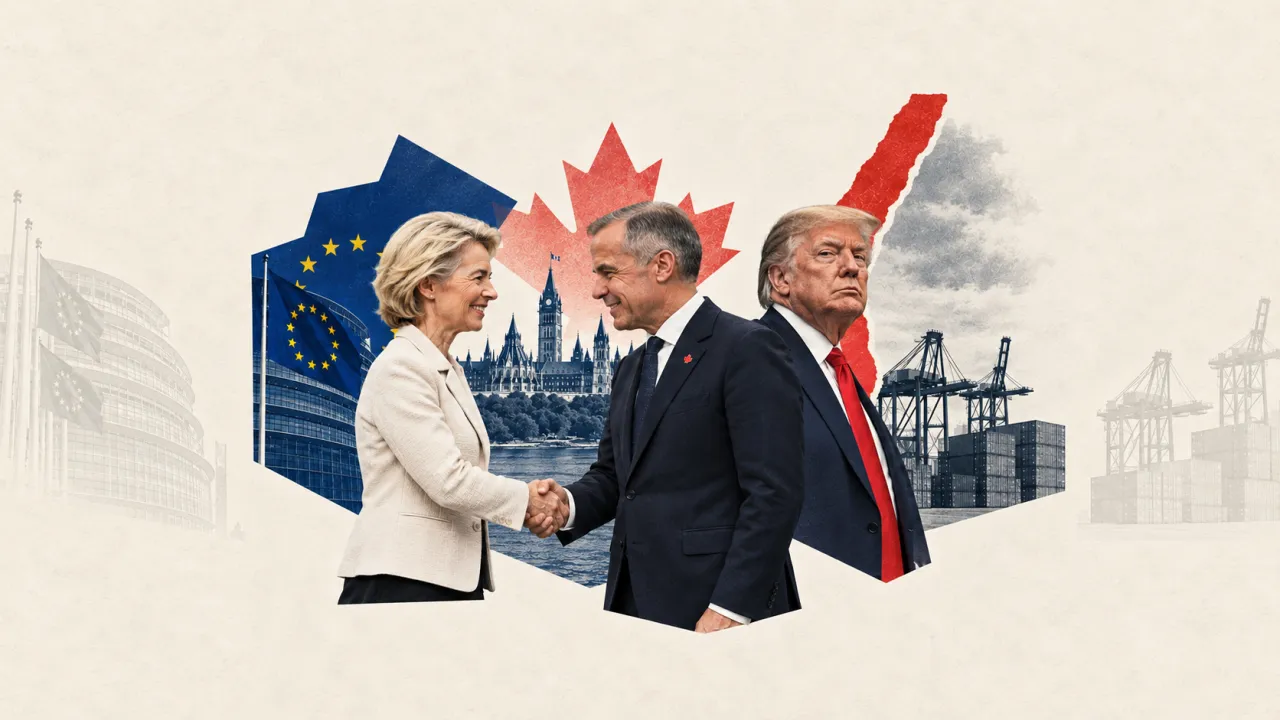
Ursula von der Leyen proposed on Wednesday, September 16, in Strasbourg, to make Canada the first "associate member" in EU history, before the European Parliament.
- 02
Mark Carney was the first non-European leader ever invited to attend the State of the Union address, according to Portafolio.
- 03
La Republica highlights that this new label still has no legal definition or details on the benefits and obligations it would imply.
ANALYSIS
Bogotá, September 17, 2026. The Colombian economic press first notes what this new status does not yet contain: no legal definition, no details on the rights or obligations it would imply. On Wednesday, in Strasbourg, European Commission President Ursula von der Leyen proposed to Canadian Prime Minister Mark Carney that his country become the first "associate member" in the history of the bloc, before the European Parliament. Carney, Portafolio emphasizes, was the first non-European leader ever invited to attend the State of the Union address. Von der Leyen addressed him directly: "I said that we must urgently reimagine our partnerships. I would therefore like to work with you to open the door for Canada to become the EU's first associate member."
La Republica stresses the context that led to this offer: the pressure from Donald Trump "is driving the community bloc and Canada to bring their positions closer together than ever before." Von der Leyen herself justified the move by refusing to depend on a single partner: "For some, the answer is to act alone. But that's not an option for us (...). We can no longer depend on him as the only means of protecting our interests."
In substance, the President of the Commission outlined a shared vision ranging "from artificial intelligence to climate change, from the Arctic to geopolitics," citing Ukraine, defense, raw materials, and supply chains. She added, addressing Carney: "Above all, dear Mark, Europe and Canada believe in democracy. We believe that power belongs not to the strongest, the richest, or those who shout the loudest, but to all of us." The two parties would move towards integrating the industrial defense bases, energy, critical raw materials, batteries, artificial intelligence, quantum computing, cybersecurity, and economic security.
But La Republica repeats: the label "does not yet exist" legally, and no details have been offered on what it would imply concretely beyond the opening of a "common space for economic prosperity and security." For the Colombian press, the standing ovation reserved for the announcement in Strasbourg contrasts with the persistent vagueness of the text: a strong political gesture, a legal architecture still entirely to be written.