Common ground and differences in coverage across the media analysed.
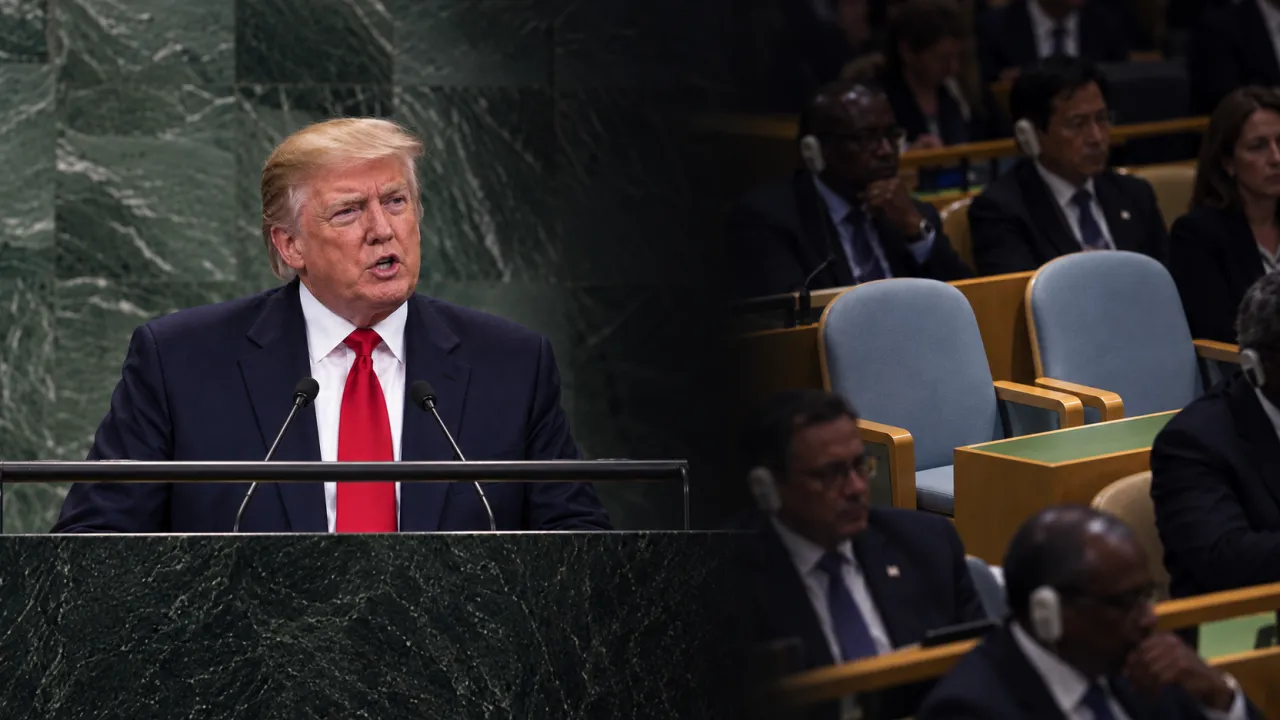
Before the United Nations General Assembly on Tuesday, Donald Trump stated he had to choose between an agreement ending the war with Iran and the destruction of the Islamic Republic, which he presented as a decision for him to make.
A few minutes after his speech, Trump announced that a three-hour meeting had taken place in New York between American representatives, led by Steve Witkoff and Jared Kushner, and Iranian officials, which he described as 'very good' and 'very productive', with another session in preparation.
A large part of the coverage presents the New York meeting as a fact and a positive development, while another part describes it as not formally confirmed or without effect on negotiations that it says are stalled.
The shift between threat and dialogue is described as a 'strategic desperation' by the Iranian military, while some Western and Russian media see it as a calculation related to the November midterm elections.
Coverage aligned with this reading
Coverage that diverges
Some coverage highlights the de-escalation conditions mentioned during the talks, including the reopening of the Strait of Hormuz, while another part relays the warning from the Iranian armed forces announcing tougher strikes in case of aggression.
This grouping describes the publications analysed, not the position of these countries’ populations or of their governments.
What the coverage of each country leaves aside, while others put it forward.
Argentina
Ecuador
Italy
Preview: 3 of 32 media perspectives. Syntheses of the media analysed — not direct quotations. Method & limitations
Dhaka is measuring the economic impact of Trump's big U-turn at the UN: the promise to reopen the Strait of Hormuz carries more weight, for an oil-importing economy, than the threat to "annihilate" Iran.
2 sources · View sources
Brussels sees in Trump's about-face between the threat of annihilation and resuming dialogue with Tehran the proof of an erratic American diplomacy, coddling authoritarian regimes while brandishing the annihilation of a UN member state.
3 sources · View sources
Brasília interprets Trump's sequence of threat followed by dialogue on Iran as an electoral calculation, noting that he is putting off any agreement until the November midterms while Lula and he take their respective campaigns to the same UN platform.
4 sources · View sources
DOMINANT ANGLE
Dhaka is measuring the economic impact of Trump's big U-turn at the UN: the promise to reopen the Strait of Hormuz carries more weight, for an oil-importing economy, than the threat to "annihilate" Iran.
ANALYSIS
Dhaka, Wednesday, September 23, 2026.
DOMINANT ANGLE
Brussels sees in Trump's about-face between the threat of annihilation and resuming dialogue with Tehran the proof of an erratic American diplomacy, coddling authoritarian regimes while brandishing the annihilation of a UN member state.
ANALYSIS
Brussels, September 23, 2026.
DOMINANT ANGLE
Brasília interprets Trump's sequence of threat followed by dialogue on Iran as an electoral calculation, noting that he is putting off any agreement until the November midterms while Lula and he take their respective campaigns to the same UN platform.
ANALYSIS
Brasília, September 23, 2026.
DOMINANT ANGLE
Ottawa is separating the threat made against Iran from the diplomatic maneuver that followed, and is primarily focused on the fact that its own Prime Minister was defending multilateralism from the same podium that Trump is trying to undermine.
ANALYSIS
Ottawa, September 23, 2026.
DOMINANT ANGLE
Beijing is watching the decline in traffic in the Strait of Ormuz more than the rhetoric, seeing it as a concrete indicator of the outcome of the negotiations between Washington and Tehran.
ANALYSIS
Beijing, September 23, 2026.
DOMINANT ANGLE
Berlin is deciphering Trump's double talk as an electoral calculation: threatening Iran with "hell" from the UN podium while putting off any agreement until after the November 3 midterms, at a time when his approval rating is at an all-time low.
ANALYSIS
Berlin, September 23, 2026.
DOMINANT ANGLE
Jerusalem is particularly noting the absence: while Washington threatens to "annihilate" Iran and then re-engages with Tehran, Netanyahu will have neither a tête-à-tête with Trump nor a Texas stop with Elon Musk at the UN.
ANALYSIS
Jérusalem, September 23, 2026.
DOMINANT ANGLE
Mexico City distinguishes the charge brought against the cartels from the Iranian aspect of Trump's speech at the UN, and entrusts the Senate with the task of relativizing its scope.
ANALYSIS
Mexico, Wednesday, September 23, 2026.
DOMINANT ANGLE
Buenos Aires is separating the rhetoric from market calculations: the Argentine press is mainly noting the drop in the barrel price after the announcement of a US-Iranian meeting in New York.
ANALYSIS
Buenos Aires, September 23, 2026.
DOMINANT ANGLE
Canberra sees the postponement of an Iranian agreement after the midterms as an electoral calculation made by Washington, at the very moment when Trump rejects the global pact on artificial intelligence that Australia has just cosigned.
ANALYSIS
Canberra, Wednesday, 23 September 2026.
DOMINANT ANGLE
Quito takes away from the New York platform less the threat to Tehran than the warning launched at Latin America, a region that Ecuador is a part of and that Washington is openly putting in its military crosshairs.
ANALYSIS
Quito, September 23, 2026.
DOMINANT ANGLE
Madrid is questioning the credibility of the threat of "annihilation", when Pedro Sánchez judges Trump's speech "not backed by facts and data" and dodges his reception at the UN.
ANALYSIS
Madrid, September 23, 2026.
DOMINANT ANGLE
Helsinki is gauging the gap between the threat to "annihilate" Iran made at the UN and a Finnish military calculation, the behind-the-scenes of which are being retraced by the local press: a strike prepared against the Houthis in Yemen, suspended at the last minute.
ANALYSIS
Helsinki, September 23, 2026.
DOMINANT ANGLE
Paris is deciphering a calendar that is above all electoral: the threat made to Iran puts off any agreement until after the November midterms, a deadline that the French press reads as a sign of a weakened presidency in public opinion.
ANALYSIS
Paris, September 23, 2026.
DOMINANT ANGLE
Jakarta is first measuring the threat to "annihilate" Iran made by Trump at the UN, before the announced resumption of dialogue with Tehran.
ANALYSIS
Jakarta, September 23, 2026.
DOMINANT ANGLE
New Delhi is deciphering the huge gap between the threat of annihilation made from the UN podium and the subsequent opening for a meeting with Iranian officials in New York.
ANALYSIS
New Delhi, September 23, 2026.
DOMINANT ANGLE
Tehran denounces Trump's threat as an admission of American "strategic despair", while confirming the resumption of talks on the Strait of Hormuz and warning of harsher strikes in the event of aggression.
ANALYSIS
Tehran, September 23, 2026.
DOMINANT ANGLE
Rome is particularly focused on the electoral dimension of Trump's speech, where the ultimatum issued to Iran serves as a backdrop for a promise of a deal postponed until after the midterms.
ANALYSIS
Rome, September 23, 2026.
DOMINANT ANGLE
Seoul first notes the absence of any North Korean mention in Trump's UN speech, and reads the November midterm election clock as the real determinant of the tempo, for both Iran and its own $200 billion investment negotiations.
ANALYSIS
Seoul, September 23, 2026.
DOMINANT ANGLE
Vilnius is gauging the sequence in terms of the barrel: the promise of a Washington-Tehran dialogue has driven Brent below $100, more so than the threat to "annihilate" Iran made at the UN.
ANALYSIS
Vilnius, September 23, 2026.
DOMINANT ANGLE
Kathmandu is particularly concerned about the slump in oil prices following the announcement of talks, which is more damaging to its import-based economy than the verbal threats against Tehran.
ANALYSIS
Katmandou, 23 September 2026.
DOMINANT ANGLE
Lima is more focused on the slump in oil prices following the announcement of a US-Iranian meeting in New York, than on the threat to "annihilate" Iran made by Trump at the UN podium.
ANALYSIS
Lima, September 23, 2026.
DOMINANT ANGLE
Islamabad is gauging both flattery and risk: Donald Trump praised Prime Minister Shehbaz Sharif as a "formidable man" at the UN podium, just before threatening to "annihilate" Iran, Pakistan's direct neighbour via Balochistan.
ANALYSIS
Islamabad, September 23, 2026.
DOMINANT ANGLE
Doha warns that the Gulf is experiencing one of its most dangerous phases since the start of the American-Israeli war against Iran, while welcoming the resumption of dialogue announced by Washington.
ANALYSIS
Doha, September 23, 2026.
DOMINANT ANGLE
Moscow is deciphering the huge gap between the threat of "annihilation" made by Trump at the UN podium and the admission, on the same day, that no agreement with Tehran is expected before the US midterm elections, a sequence seen as primarily calibrated for domestic opinion.
ANALYSIS
Moscow, September 23, 2026.
DOMINANT ANGLE
Stockholm sees the postponement of the "major decision" on Iran as an electoral calculation, with the Swedish press linking the UN ultimatum to the November midterm elections, which are weakening Trump's Republican camp.
ANALYSIS
Stockholm, September 23, 2026.
DOMINANT ANGLE
Ankara is separating the threat of annihilation made from the UN podium from the diplomatic breakthrough that followed: the Turkish press is mainly focusing on the conditions set by Tehran to reopen the Strait of Hormuz.
ANALYSIS
Ankara, September 23, 2026.
DOMINANT ANGLE
Kyiv takes away from the threat-then-dialogue sequence with Iran a pattern it hopes to see repeated on its own Russian dossier, carried by the same emissaries Witkoff and Kushner.
ANALYSIS
Kyiv, September 23, 2026.
DOMINANT ANGLE
London is interpreting the threat of "annihilation" made by Trump at the UN as a speech intended more for the midterms than for Tehran, with the British press emphasizing that the promised agreement is not expected until after the November vote.
ANALYSIS
London, 23 September 2026.
DOMINANT ANGLE
The United States government measures this double message against the electoral calendar: the threat to "annihilate" Iran gives way, in a matter of minutes, to the announcement of a postponed agreement after the midterms on November 3.
ANALYSIS
Washington, September 23, 2026.
DOMINANT ANGLE
Caracas gauges the word "annihilate" by its own fate: a few months after claiming the military capture of Nicolás Maduro, Washington wields the same determination against Iran, a warning that Venezuela reads as valid for all of Latin America.
ANALYSIS
Caracas, September 23, 2026.
DOMINANT ANGLE
Pretoria is deciphering the huge gap between the threat to "annihilate" Iran made from the UN podium and the resumption of dialogue announced afterwards, as well as the departure of the Iranian delegation during the speech.
ANALYSIS
Pretoria, September 23, 2026.
Explore every perspective on this subject across 32 countries.
Compare viewpoints and see where they diverge.
published on
countries
sources
articles
gap
Beyond the already known sequence of threat and dialogue, global coverage of this UN summit converges on three aspects that have taken a back seat: a timeline deemed electoral by a large portion of the Western press, a Gulf region described as already unstable, and open bilateral tensions, from Madrid to Mexico and including Havana.
No agreement is signed: a new round of talks is scheduled without a fixed date, while the Strait of Hormuz remains closed and the US blockade of Iranian ports is in effect.
A large portion of the Western press associates the shift between threat and diplomatic opening with the internal fragility of the American president. Le Monde cites a CNN-SSRS poll according to which 71% of Americans disapprove of his foreign policy, 70% believe the war against Tehran has harmed the interests of the United States, and 75% think the White House has no clear plan to exit the crisis. Handelsblatt, on its part, notes a Reuters/Ipsos poll placing Trump's trust rating at its lowest level since the beginning of his political career.
The Independent reports that six weeks before the election, Republican elected officials are starting to distance themselves from Trump on the war in Iran and gas prices, a party source quoted by the newspaper judging his presence "not useful" in certain campaigns. The LA Times notes that less than a third of Americans approve of his handling of the conflict, more than six months after its outbreak.
Trump himself contests this reading. According to the Hindu Business Line, he specified that he is not running in the November election and gives "no credit" to this calendar in his decision on Iran. But before journalists, quoted by CNBC, he also said about Tehran: "They're waiting to see how I come out of the midterm election. What they don't realize is that I'm not a candidate."
According to the New York Times, cited by Helsingin Sanomat, the bombs were already loaded and the target lists approved for a strike against the Houthi rebels in Yemen the weekend prior to the summit. Trump chose to suspend the attack at the last moment, despite the call from Saudi Crown Prince Mohammed bin Salman, because the Houthis had promised to no longer target American ships in the region.
« the Gulf is going through one of its most dangerous phases »
Deutsche Welle reports that the Houthis, supported by Iran, continue to advance in Yemen and threaten traffic in the Red Sea; the media adds that Saudi Arabia accuses militias close to Tehran of having targeted a strategic oil pipeline, towards which Riyadh had redirected part of its exports, after reducing deliveries via the Strait of Hormuz. Helsingin Sanomat specifies that another oil pipeline, in Iraq, was damaged at the beginning of September by rebels supported by Iran and could remain out of service for weeks.
According to the maritime tracking company Kpler, cited by CGTN, only two commercial ships passed through the Strait of Hormuz on Monday, compared to ten the day before. Before the General Assembly, the Emir of Qatar, Sheikh Tamim bin Hamad Al Thani, also warned, advocating for diplomacy as the only lasting solution. Iranian media have also reported the sound of an explosion near the Iranian island of Qeshm, in the Strait of Hormuz, without any cause being established, according to Al Jazeera.
In Spain, Prime Minister Pedro Sánchez declined the invitation to the reception hosted by Trump for delegation heads at the UN, as in 2024 and 2025, according to El Confidencial. Expansión links this gesture to a long-standing strained relationship: tariff threats related to Spain's refusal to increase its military spending, disputed use of Spanish bases for strikes against Iran, and accusations by Trump against Madrid's handling of the arrival of Moroccan migrants in Ceuta.
In Cuba, Trump called the country a "failed state" and promised the imminent fall of its government, prompting the Cuban delegation to leave during his speech. Cuban Foreign Minister Bruno Rodríguez denounced "falsedades" and an "guerra económica", according to El Financiero.
In Israel, Benjamin Netanyahu's visit to the General Assembly, scheduled for Thursday, was reduced to a round trip: according to the Jerusalem Post, the Prime Minister is to deliver his speech and then leave the same day, likely without spending the night in the United States. A planned stop in Texas, including a meeting with Elon Musk and a possible visit to SpaceX facilities, was cancelled the previous weekend; no meeting with Trump is planned either, despite efforts by Netanyahu's advisors to organize one.
Before the Assembly, Trump described Mexico as the "epicentre of cartel violence", deeming it unacceptable to share a 3,200-kilometre border with a territory he claims is controlled by enemy cartels, according to El Norte. The President of the Mexican Senate, Higinio Martínez, described these remarks as "grave" while believing they should not be a cause for concern, considering them consistent with the usual style of the American president, and referred the task of responding to them to the federal government through institutional channels.
The same speech was used by Trump to claim at least 70 strikes conducted in the Caribbean and the Pacific against vessels suspected of trafficking, which killed 234 people presented as narcotraffickers, as well as the January operation that, according to him, allowed for the capture of former Venezuelan President Nicolás Maduro, now incarcerated in New York. He mentioned, regarding Venezuelan oil, that "the spoils go to the winner", according to Runrun.es and El Nacional, and announced a bilateral energy agreement involving 65 billion barrels with Caracas.
According to Primicias, he warned that he would employ military force in Latin America if the United States felt threatened, before holding, barely after his speech was finished, an unprecedented informal meeting with Venezuelan interim President Delcy Rodríguez, as specified by US Ambassador to the UN Mike Waltz.
Pedro Sánchez judges Trump's speech "not backed by facts and data", according to HuffPost Spain.
The Iranian general staff describes the threat as a "strategic desperation", citing the exhaustion of the US army.
The war began on February 28 with strikes that killed Supreme Leader Ali Khamenei, who was replaced by his son Mojtaba.
Tehran sets three conditions for the reopening of Ormuz: lifting of the naval blockade, unfreezing of assets, and an end to the war.