
DOMINANT ANGLE
Berlin is deciphering Trump's double talk as an electoral calculation: threatening Iran with "hell" from the UN podium while putting off any agreement until after the November 3 midterms, at a time when his approval rating is at an all-time low.
Dominant angle identified — does not reflect unanimity of this country’s media
KEY POINTS
- 01
A Reuters/Ipsos poll cited by Handelsblatt shows Trump's trust rating at its lowest level since the start of his political career
- 02
Trump told the UN: "Ich glaube, wir werden direkt nach der Wahl eine Einigung erzielen", hinting at an agreement with Iran after the November 3 midterms
- 03
According to Tagesschau, the meeting between US and Iranian representatives in New York lasted three hours and was deemed "very good" by Trump
ANALYSIS
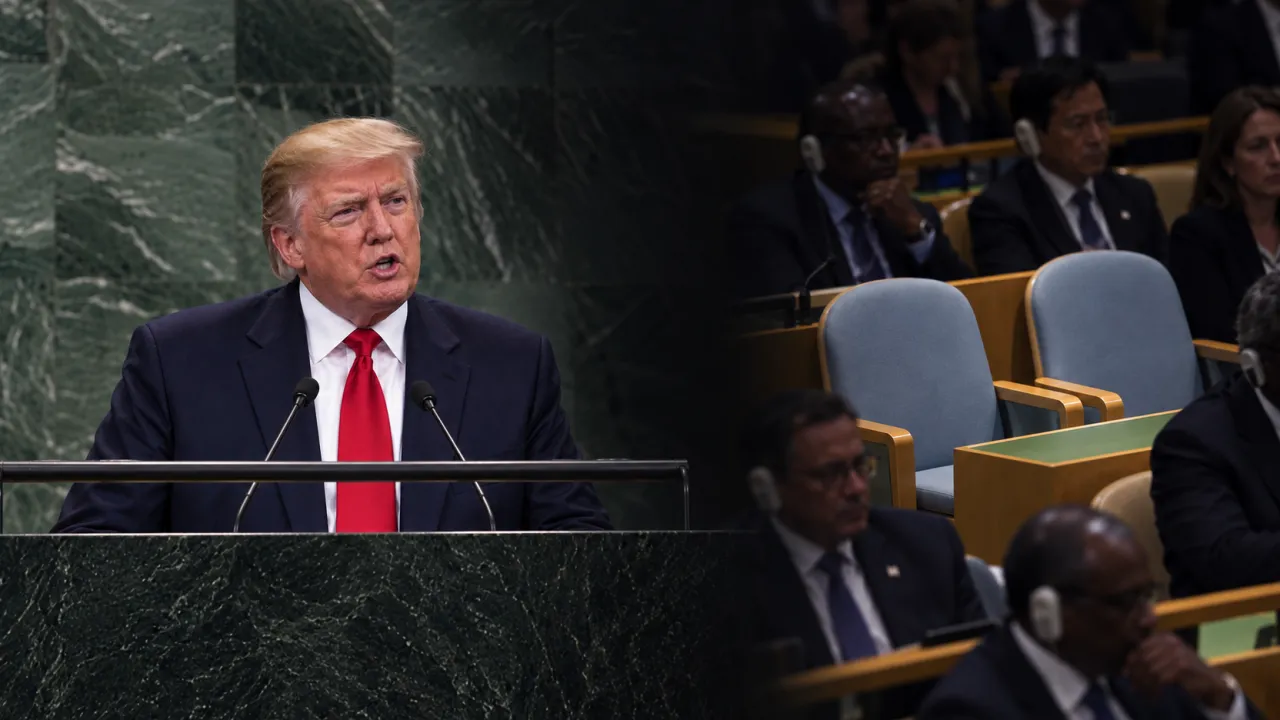
Berlin, September 23, 2026. The German press first notes the US electoral calendar behind Donald Trump's double announcement at the UN podium. Before the General Assembly on Tuesday, the US President again threatened to send Iran "in die Hölle" — to hell — if no agreement is reached, while ensuring that a "very good" three-hour meeting had just taken place in New York between American and Iranian representatives, reports Tagesschau. According to the public channel, Trump stated: "Ich glaube, wir werden direkt nach der Wahl eine Einigung erzielen" — I believe we will reach an agreement just after the election — thus postponing any diplomatic outcome until after the midterm elections on November 3, which will renew the House of Representatives and part of the Senate.
Handelsblatt highlights the domestic context of this sequence: a Reuters/Ipsos poll cited by the economic daily shows Trump's confidence rating has fallen to its lowest level since the beginning of his political career, in a climate marked by high and unpopular gas prices. The newspaper notes that Trump began his speech with a strong praise of the United States — "Amerika ist zurück" — before addressing Iran, which he called the "tyrant of the Middle East" that would no longer be one. The US President reaffirmed: "I will never let Iran possess a nuclear weapon."
Deutsche Welle broadens the scope to a region that continues to deteriorate nearly seven months after the start of the conflict in late February: Iranian-backed Houthi militias are advancing in Yemen and threatening traffic in the Red Sea, while Saudi Arabia accuses militias close to Tehran of targeting a strategic oil pipeline. According to the New York Times cited by DW, Saudi Crown Prince Mohammed bin Salman called Trump on Sunday to pressure him to intervene against the Houthis; Axios reports that Washington rejected a previous Saudi request for strikes.
None of the German articles consulted mention Trump's exchanges on Cuba or Mexico, nor the response from the Spanish head of government. The German reading remains focused on the articulation between military pressure, postponed negotiation, and the American electoral deadline.
SOURCES (3)
- HandelsblattMEDIUM