
DOMINANT ANGLE
Seoul first notes the absence of any North Korean mention in Trump's UN speech, and reads the November midterm election clock as the real determinant of the tempo, for both Iran and its own $200 billion investment negotiations.
Dominant angle identified — does not reflect unanimity of this country’s media
KEY POINTS
- 01
Trump said he believes an agreement with Iran could come "right after the mid-term elections" in November, tying this timeline to the risk of Republicans losing Congress.
- 02
The Korea Times notes that Trump made no mention of North Korea in his UN speech, while reaffirming his intention to meet Kim Jong-un later this year.
- 03
Lee Jae-myung and Trump held a summit on the sidelines of the General Assembly on September 18, acknowledging progress on promised South Korean investment under the tariff agreement and an agreement to seek the resumption of dialogue with Pyongyang.
ANALYSIS
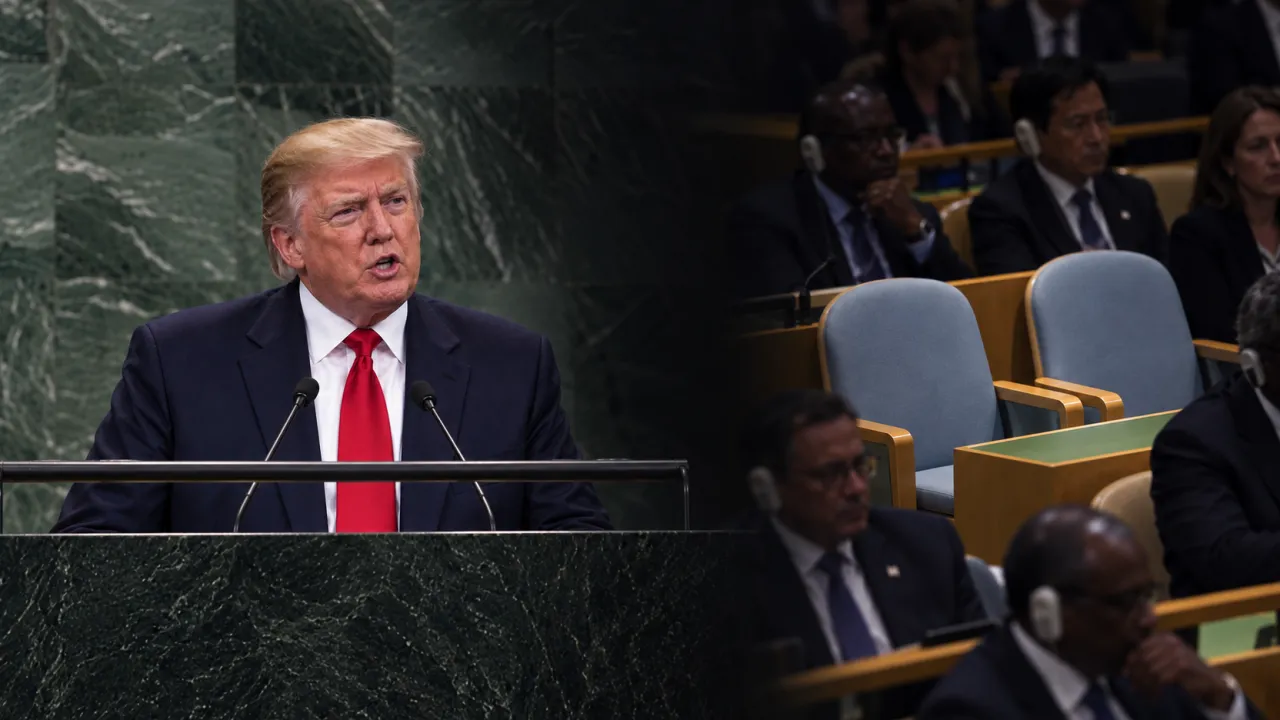
Seoul, September 23, 2026. Before the United Nations General Assembly on Tuesday, Donald Trump said he had to choose between an agreement allowing Iran to "rebuild" and become one of the largest countries in the Middle East, or "annihilate the Islamic Republic" and "drive it into hell with no chance of survival," according to the Korea Times. He added that he believed an agreement could come just after the November midterm elections, linking this timeline to the fact that Tehran was waiting to see how his party would perform in an election where Republicans risk losing Congress, in part due to the fuel price surge linked to the war. A few minutes later, he announced a three-hour meeting in New York between his emissaries Steve Witkoff and Jared Kushner and Iranian officials, described as a "very good meeting," while specifying that the latter were "not of the highest level, but it's already something," reports the Korea Herald.
For the South Korean press, the notable fact lies less with Iran than with what the speech did not contain: the Korea Times notes that Trump made no mention of North Korea or the peninsula, while he discussed Iran, Ukraine, artificial intelligence, Cuba, and Venezuela, while also reaffirming his intention to meet Kim Jong-un later this year. This omission echoes the summit held four days earlier on the sidelines of the Assembly, where Trump and President Lee Jae-myung discussed the resumption of dialogue with Pyongyang, Trump presenting himself as a "peacemaker" and Lee as a "pacemaker," according to KBS World. The same interview noted progress on the promised South Korean investment in the tariff agreement, cooperation on fuel supply, nuclear-powered submarines, and civil uranium enrichment.
That's where Seoul sees the real stake of the American electoral calendar: Korea Pro reports that the midterm election clock is driving up the stakes for South Korean negotiations on $200 billion in investment, the same electoral tempo that governs, according to Trump himself, the fate of the agreement with Iran.