
DOMINANT ANGLE
Mexico City distinguishes the charge brought against the cartels from the Iranian aspect of Trump's speech at the UN, and entrusts the Senate with the task of relativizing its scope.
Dominant angle identified — does not reflect unanimity of this country’s media
KEY POINTS
- 01
Trump stated at the UN that "México is the epicenter of cartel violence" and deemed it unacceptable that the US shares a 3,200 km border with a territory "controlled by enemy cartels".
- 02
Trump claimed at least 70 strikes against vessels in the Caribbean and the Pacific, killing 234 alleged narcotraffickers, in addition to the operation against Nicolás Maduro in Venezuela.
- 03
The President of the Mexican Senate, Higinio Martínez, described the comments as "grave" but believed they should not be a cause for concern, leaving it to the federal government to respond through institutional channels.
ANALYSIS
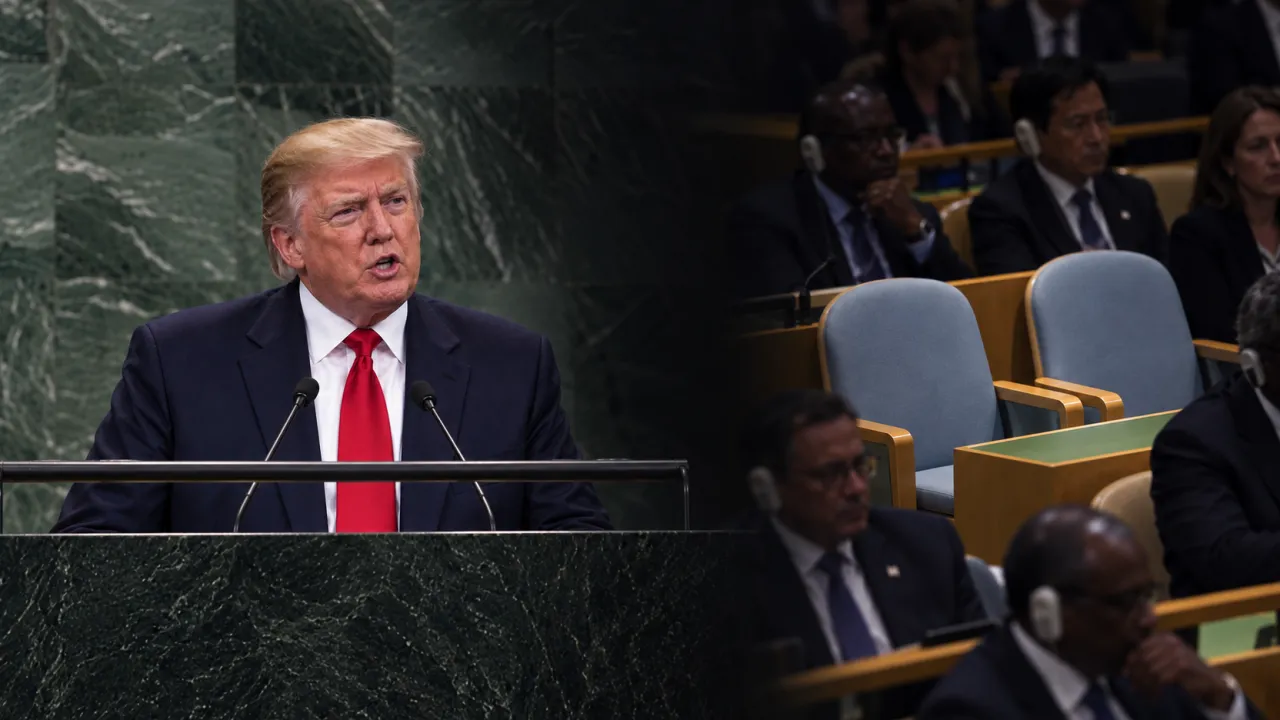
Mexico, Wednesday, September 23, 2026. From the lengthy speech delivered Tuesday by Donald Trump before the United Nations General Assembly, the Mexican press mainly retains the passage that directly concerns it: "México es el epicentro de la violencia de los cárteles." The American president deemed it "inacceptable" that the United States shares a 3,200-kilometer border with a territory he claims is "controlled by enemy cartels," which he equates, since their classification in 2025 as terrorist organizations, to "enemies of humanity." However, he assured that he maintains an "excellent relationship" with the government of President Claudia Sheinbaum, stating that Mexico also does not want the cartels.
Trump highlighted, in the same vein, at least 70 strikes carried out in the Caribbean and the Pacific against suspected drug trafficking vessels, which killed 234 people presented as narcotraffickers, as well as the operation conducted earlier in the year against Nicolás Maduro in Venezuela, presented as being subject to American justice for drug trafficking.
On the institutional side, the president of the Mexican Senate, Higinio Martínez, from the Morena party, qualified the remarks as "graves" but estimated that they should not be a cause for concern, judging them to be in line with the "style" of the American president. He referred the matter to the federal government to respond "through institutional channels," while awaiting the position of the Mexican chancellor at the UN, and dismissed the idea of a bilateral rupture, recalling that the shared border remains a lasting link between the two countries.
The same speech also described Cuba as a "failed state," prompting the departure of the Cuban delegation and a response from Chancellor Bruno Rodríguez denouncing "falsedades" and an "economic war." The consulted Mexican articles do not link this passage to the threats made against Iran or the announcement of a resumption of dialogue with Tehran later in the same speech: the Mexican reading isolates the regional aspect, that of the threat of military force in Latin America if Washington deems its interests threatened, without connecting it to the Iranian thread that dominates the international coverage of the summit.
SOURCES (4)
- El FinancieroMEDIUM
- El NorteMEDIUM
- Vanguardia MXMEDIUM