
DOMINANT ANGLE
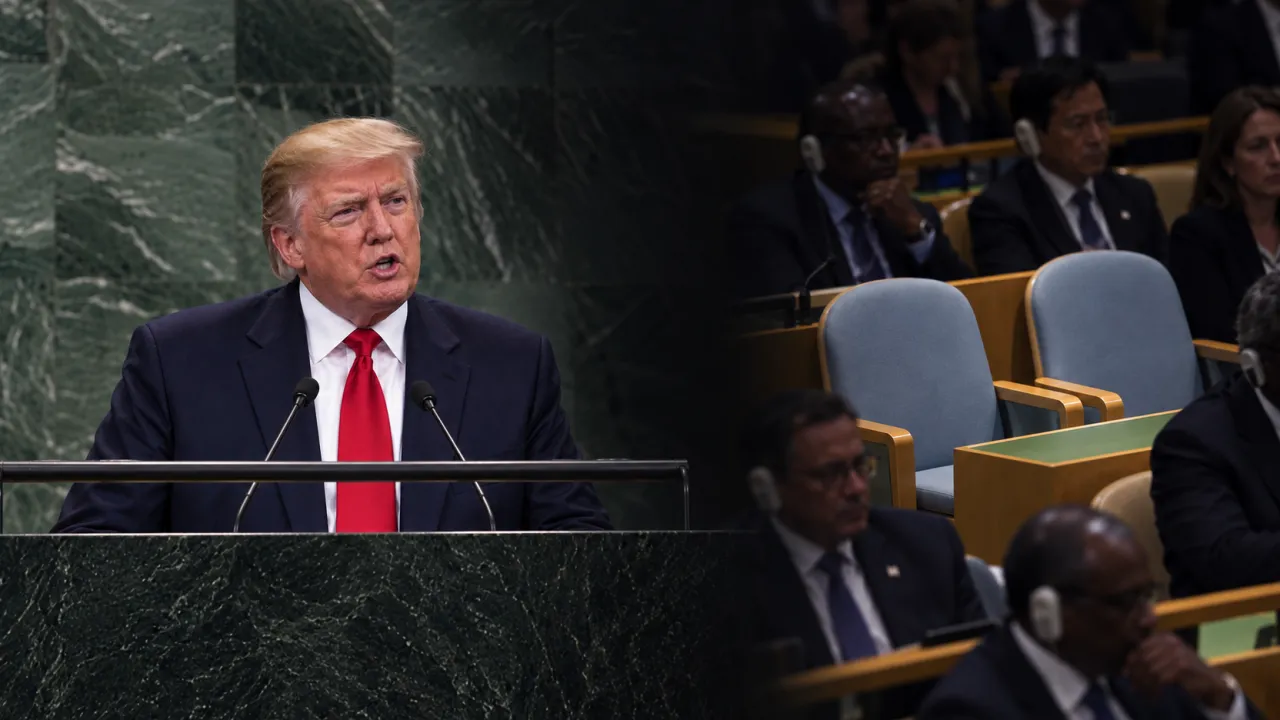
Moscow is deciphering the huge gap between the threat of "annihilation" made by Trump at the UN podium and the admission, on the same day, that no agreement with Tehran is expected before the US midterm elections, a sequence seen as primarily calibrated for domestic opinion.
Dominant angle identified — does not reflect unanimity of this country’s media
KEY POINTS
- 01
Before the UN General Assembly on Tuesday in New York, Trump said he had to choose between an agreement with Iran or "wipe out the Islamic Republic and do it quickly" (RT).
- 02
He estimated that an agreement would be found "just after the election", namely after the US midterm elections in November (RT).
- 03
According to TASS, Trump indicated that Steve Witkoff and Jared Kushner had met with mediators on the Iranian issue, with "a lot of good ideas" and "things that are working very well".
ANALYSIS
Moscow, September 23, 2026. Before the United Nations General Assembly in New York on Tuesday, Donald Trump said he was facing a "great decision": concluding an agreement that would allow Iran to "rebuild a country much greater than before", or, in his words, "annihilate the Islamic Republic and do it quickly", by "leading it to hell with no chance of survival". The American president defended the war waged by Washington and Israel against Tehran for nearly seven months, accusing the Iranians of seeking nuclear weapons, supporting terrorism, and attacking commercial traffic. He also called on other countries to join the United States in imposing "complete economic isolation" on Iran until its conditions are met. The Iranian delegates left the room during the speech, leaving only a subordinate representative in place.
A few hours later, the tone changed: Trump revealed that his envoys Steve Witkoff and Jared Kushner had held a "very productive" meeting with Iranian representatives, which he hailed as "constructive and promising". He claimed to believe that an agreement would be found "just after the election" - that is, after the American mid-term elections in November - and that Washington and Tehran would "necessarily get there, one way or another".
According to the TASS agency, Trump returned to the meeting during an event dedicated to the regional alliance Shield of the Americas, explaining that "mediators, not of the highest level, but still" had participated in the exchanges, and that "many good ideas" had emerged, "things that work very well".
For the Russian press, this sequence - public threat followed by a conciliatory retreat, and especially this explicit referral of any settlement to the post-midterms period - outlines a calendar dictated first and foremost by the American domestic electoral agenda rather than by the proclaimed urgency at the UN tribune. The gap between the language of annihilation, spoken in public, and the announcement, on the same day, of a meeting described as productive, fuels the reading of a speech designed for the American electorate as much as for Tehran, the November deadline serving as a convenient vanishing point for any promise of settlement.