
DOMINANT ANGLE
Brasília interprets Trump's sequence of threat followed by dialogue on Iran as an electoral calculation, noting that he is putting off any agreement until the November midterms while Lula and he take their respective campaigns to the same UN platform.
Dominant angle identified — does not reflect unanimity of this country’s media
KEY POINTS
- 01
Trump stated he has a "major decision" to make before the UN: an agreement with Iran or "wipe out the Islamic Republic and send it to hell", adding he wants to conclude an agreement "right after the election" (G1, 22/09).
- 02
A few hours after his speech, Trump announced a three-hour meeting between US and Iranian officials in New York, described as "very good", with another session scheduled soon (G1, 22/09).
- 03
According to a Reuters count relayed by Folha, Trump has mentioned Joe Biden nearly 900 times since January, averaging three times a day, in the midst of the November 3 midterm campaign.
ANALYSIS
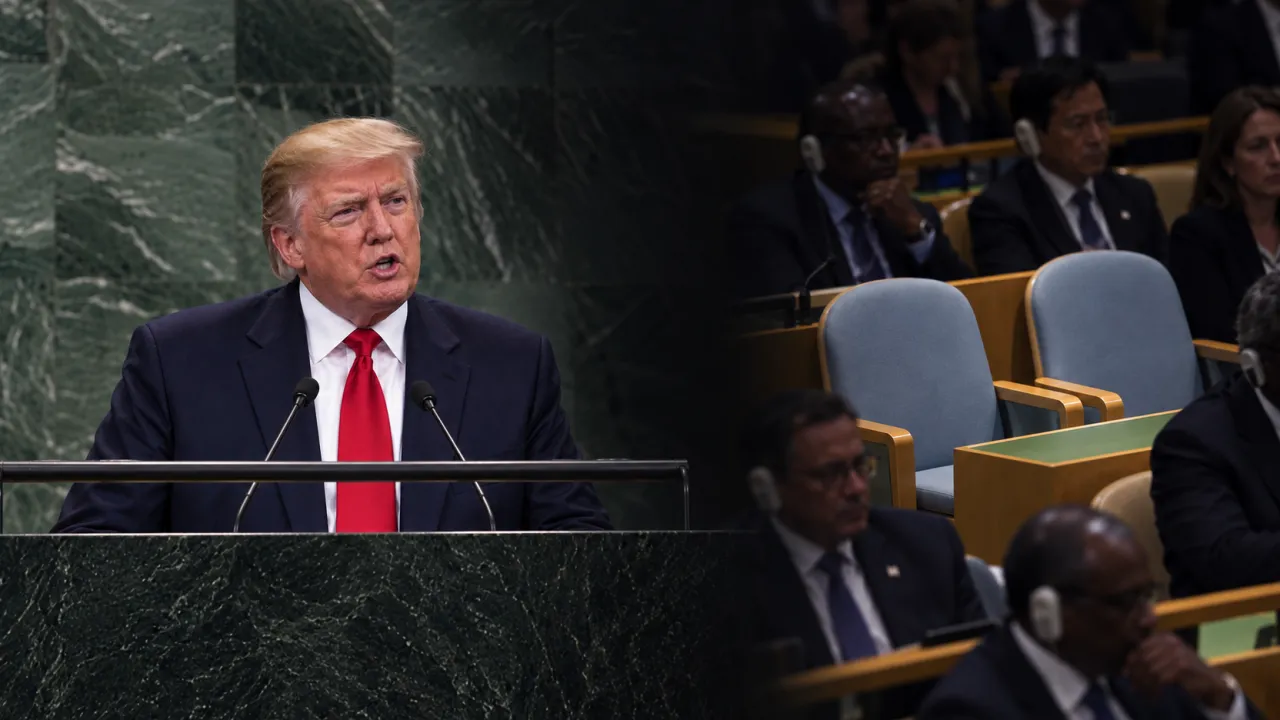
Brasília, September 23, 2026. The Brazilian press is reading Donald Trump's speech before the UN General Assembly, on Tuesday, September 22, in New York, through an electoral rather than strictly diplomatic prism. The American president said he has a "great decision" to make: conclude an agreement with Iran or "annihilate the Islamic Republic and send it to hell", before adding, according to G1, that he would try to "conclude a fair agreement after the elections". A few hours later, he announced that a US delegation and an Iranian delegation had held a three-hour meeting in New York, which he described as "very good", promising a new session "in the very near future".
For the Brazilian media, this shift from threat to dialogue is first and foremost part of the American electoral calendar, that of the midterms on November 3. The Jornal de Brasília recalls that Trump is facing growing unpopularity on the eve of the election, linked to the cost of living, while Folha highlights that he mentioned Joe Biden nearly 900 times this year, according to a Reuters count, on average three times a day, a tactic that a Republican strategist cited by the newspaper attributes to the desire to keep public opinion focused on the former president rather than on his own difficulties.
G1 explicitly associates the two heads of state in the same reading: "With the impending elections in both countries", Lula and Trump have taken their respective electoral agendas to the UN podium. Lula, who opened the debate according to tradition, defended sovereignty and multilateralism, criticized the embargo on Cuba, and launched, without naming him, that "Brazil is nobody's backyard". The Jornal de Brasília notes that he also asked Trump not to interfere in the Brazilian election in October, where he faces a tight second-round runoff against Senator Flávio Bolsonaro (PL), a declared ally of the American president.
The Brazilian press also notes that Trump described Cuba as a "failed state" when announcing the imminent fall of its government, as his diplomats left the room, and that he promised to use "unmatched military power" in the Western Hemisphere against the cartels, citing the operation carried out against Nicolás Maduro in Venezuela. The Brazilian corpus dwells little on the reaction of the Iranian forces or on oil prices: the retained angle remains that of the electoral parallel between the two presidents.
SOURCES (4)
- G1 Globo MundoMEDIUM
- Jornal de BrasíliaMEDIUM
- Folha MundoMEDIUM
- EstadãoMEDIUM