
DOMINANT ANGLE
New Delhi is deciphering the huge gap between the threat of annihilation made from the UN podium and the subsequent opening for a meeting with Iranian officials in New York.
Dominant angle identified — does not reflect unanimity of this country’s media
KEY POINTS
- 01
Trump said he believes a deal would be struck "right after the election", estimating that Tehran is waiting to see how he fares in the midterms
- 02
The US Navy has escorted over a billion barrels out of the Strait of Hormuz, with 22 to 37 ships evacuated every day, according to Trump
- 03
According to CNN as cited by the Times of India, a meeting between US and Iranian officials on the sidelines of the General Assembly remains a possibility but has not been formally scheduled
ANALYSIS
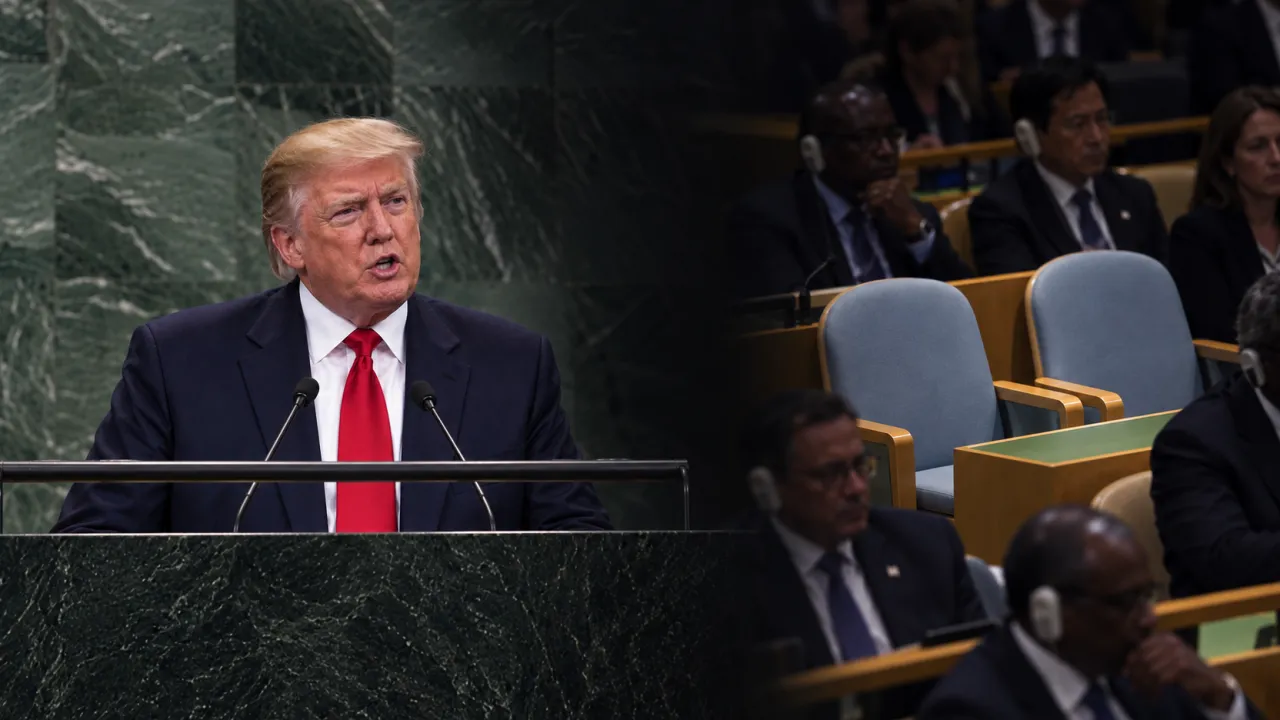
New Delhi, September 23, 2026. The Indian press first notes the great disparity between the two registers used by Donald Trump before the 81st session of the UN General Assembly, on Tuesday: the threat and the outstretched hand, almost in the same breath.
Before the delegations, the American president stated that he would have "a major decision" to make: conclude an agreement that would allow Iran "to rebuild" and become "one of the greatest countries in the Middle East, or even the world", or "annihilate the Islamic Republic, and quickly, to never again give it the chance to kill and destroy". He said he believes an agreement would be signed "just after the election", estimating that Tehran is waiting to see how he fares in the midterm elections — while specifying, according to The Hindu Business Line, that he himself is not running and that he will give "no credit" to this electoral calendar in his decision on Iran.
Trump also thanked the Security Council for voting on a resolution condemning Iran's "despicable terrorist attacks" against commercial shipping, claiming that the American navy has escorted over a billion barrels out of the Strait of Hormuz and a flow of oil "greater than at any time since the start of the war", with 22 to 37 ships evacuated every day.
The Times of India then shifts the angle to the diplomatic track: according to CNN citing an American official, Washington is considering a meeting with Tehran on the sidelines of the General Assembly, "if the conditions are met", without any formal meeting being scheduled — a meeting could also only involve Trump's advisors. The newspaper emphasizes the uncertainty on the American side about whether the Iranian diplomats present in New York, including Minister Abbas Araghchi and President Massoud Pezeshkian, have the green light from Supreme Leader Mojtaba Khamenei, the sole final decision-maker. Secretary of State Marco Rubio and UN envoy Mike Waltz have both said Trump is "always open" to dialogue, Waltz asking CNN: "who speaks for the ayatollah?"
This juxtaposition — public ultimatum then half-open doors — fuels the Indian reading of an American diplomacy with two speeds, where the firmness of the platform coexists with a channel that remains active in New York.