
DOMINANT ANGLE
Paris is deciphering a calendar that is above all electoral: the threat made to Iran puts off any agreement until after the November midterms, a deadline that the French press reads as a sign of a weakened presidency in public opinion.
Dominant angle identified — does not reflect unanimity of this country’s media
KEY POINTS
- 01
A CNN-SSRS poll cited by Le Monde indicates that 71% of Americans disapprove of Trump's foreign policy, 70% believe the war against Tehran has harmed US interests, and 75% think the White House has no clear plan to exit the crisis
- 02
A three-hour meeting was held in New York between US emissaries Steve Witkoff and Jared Kushner and the Iranian delegation led by Abbas Araghchi, focused on the reopening of the Strait of Hormuz
- 03
Trump stated he believes an agreement will be reached with Iran right after the November midterm legislative elections, where his party risks losing Congress due in part to high fuel prices
ANALYSIS
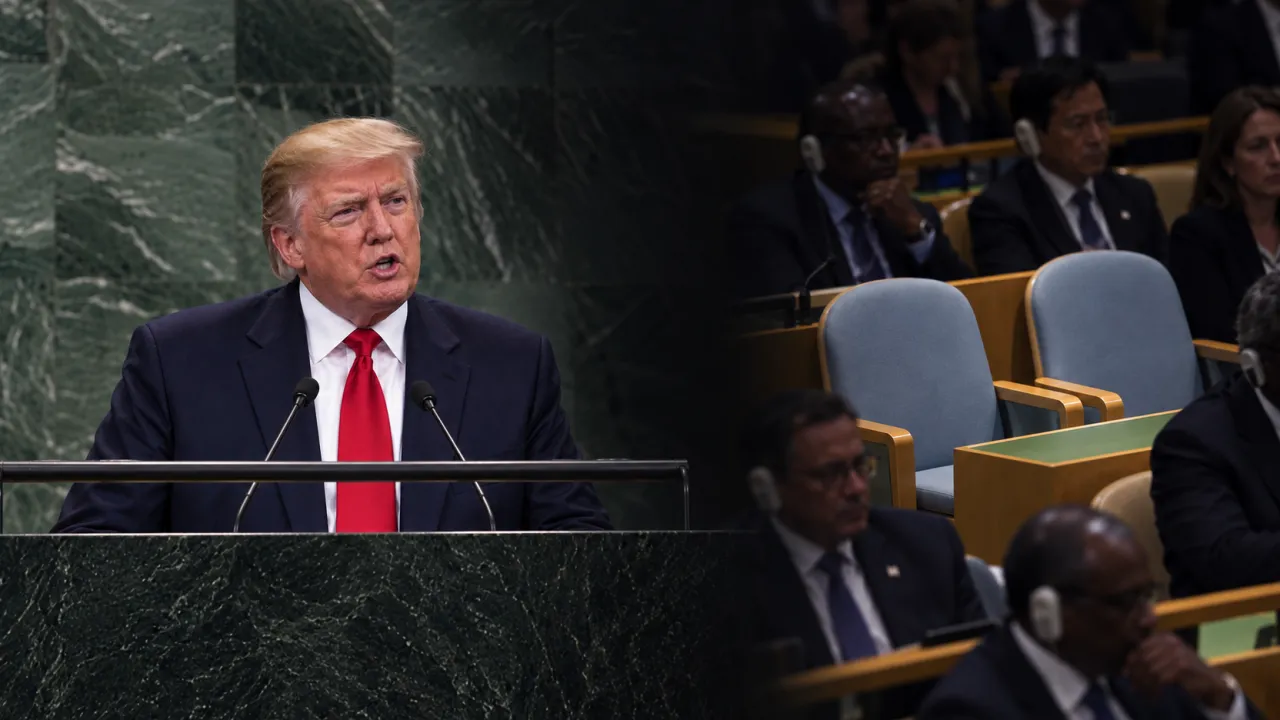
Paris, September 23, 2026. At the United Nations podium on Tuesday, Donald Trump blew hot and cold on Iran: the threat to "annihilate" the Islamic Republic, followed a few minutes later by the announcement of a resumption of dialogue with Tehran. Members of the Iranian delegation left the room during his speech. The French press, while meticulously recording this sequence, focuses mainly on what it reveals about the internal fragility of the American president as the midterm elections approach.
The French government notes that Donald Trump, "weakened politically", did not display "the same aggressiveness as in 2025" and cites a CNN-SSRS poll according to which 71% of Americans disapprove of his foreign policy, 70% believe that the war against Tehran has harmed the interests of the United States, and 75% believe that the White House has "no clear plan to exit the crisis". It is in this context that the president promised: "I believe we will reach a fair agreement after the elections" legislative elections in November, where his party risks losing Congress - notably, as 20 Minutes specifies, "due to the high price of fuel because of the war".
The French press details the shift: a three-hour meeting in New York between Steve Witkoff, Jared Kushner, and the Iranian delegation led by Abbas Araghchi, focused on the reopening of the Strait of Hormuz, with a new session announced "in the very near future". On BFM Business, the program Le Monde qui bouge summarizes the weariness of French observers in the face of repeated announcements: "Imminent agreements, Donald Trump has already announced almost 40 to us in seven months, but in reality, it is rather the Revolutionary Guards who are imposing their rhythm."
In the background of this Iranian dossier, the French press is also following the Democratic mobilization: The HuffPost devotes an article to Kamala Harris, who has entered the campaign in Michigan alongside Abdul El-Sayed in an attempt to save a decisive Senate seat before the November 3 election. The same UN speech also saw Donald Trump predict the fall of the Cuban government, a statement that Cuban Foreign Minister Bruno Rodríguez described as "slander". The French reading thus retains a president who subordinates his Iranian diplomacy to a tight electoral calendar, rather than a real strategic shift towards Tehran.
SOURCES (5)
- 20 MinutesMEDIUM
- HuffPost FranceMEDIUM
- BFM BusinessMEDIUM