
DOMINANT ANGLE
Buenos Aires is separating the rhetoric from market calculations: the Argentine press is mainly noting the drop in the barrel price after the announcement of a US-Iranian meeting in New York.
Dominant angle identified — does not reflect unanimity of this country’s media
KEY POINTS
- 01
Brent fell to $98.91 (-0.3%) and WTI to $89.93 (-0.7%) in Asia on Wednesday, after the announcement of a US-Iranian meeting deemed "muy buena" by Trump
- 02
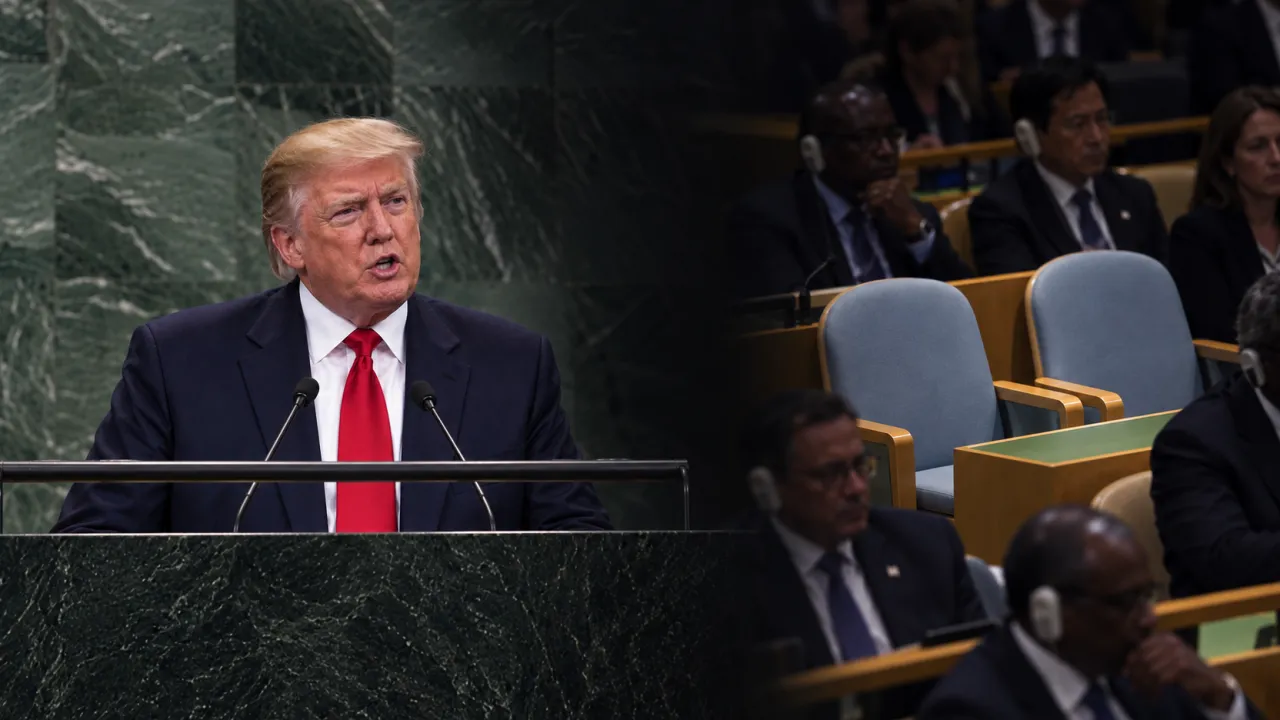
According to Norman Powell (+Perfil), Trump delivered a speech of about 40 minutes, staying almost entirely faithful to his prepared text, unusual for him
- 03
Analyst Stephen Innes (Quintex Intel) estimates that the three-hour meeting shifts the market's pricing from a pure escalation to a "genuino diplomatic process"
ANALYSIS
Buenos Aires, September 23, 2026. The Argentine press clearly distinguishes between the two parts of Donald Trump's speech at the United Nations podium. On +Perfil, in the program Ronda de Corresponsales, journalist Norman Powell breaks down the forty minutes of speech, marked by an unusual fidelity to the teleprompter: "Trump on this occasion hardly deviated from his text on the teleprompter." The American president first boasted about his domestic record — stock market, poverty, immigration, crime — before dedicating the bulk of his speech to the war between Russia and Ukraine, promising that it "will end soon," and to the conflict pitting Israel and the United States against Iran.
It is on this last point that Clarín focuses its analysis, but from a decidedly economic angle. The newspaper recalls that Trump mentioned an "important decision" before the UN: to conclude an agreement or "drag Iran to hell." A few hours later, he announced a "very good" three-hour meeting between American and Iranian representatives in New York, without naming the negotiators. On Wednesday, oil prices fell in Asia: Brent fell to $98.91 (-0.3%), WTI to $89.93 (-0.7%), both contracts remaining below the symbolic threshold of $100, which has been repeatedly crossed since the outbreak of war in the Middle East in February.
Clarín quotes analyst Stephen Innes, from Quintex Intel, who believes that this meeting "shifted the market from a quote based exclusively on the escalation towards a genuine diplomatic process, although a definitive agreement still seems distant." The newspaper also recalls that seven months after the American-Israeli strikes that triggered the conflict, the parties remain at an impasse: Tehran keeps the Strait of Hormuz closed, Washington continues its counter-blockade of Iranian ports.
For the Argentine press, the gap between the threatening rhetoric of the podium and the almost simultaneous announcement of a dialogue is less of a contradiction than a deliberate calculation: the threat serves as leverage, the meeting serves as a signal to the markets. Neither of the two articles mentions the diplomatic incident in the hall or the American electoral calendar.