
DOMINANT ANGLE
Ankara is separating the threat of annihilation made from the UN podium from the diplomatic breakthrough that followed: the Turkish press is mainly focusing on the conditions set by Tehran to reopen the Strait of Hormuz.
Dominant angle identified — does not reflect unanimity of this country’s media
KEY POINTS
- 01
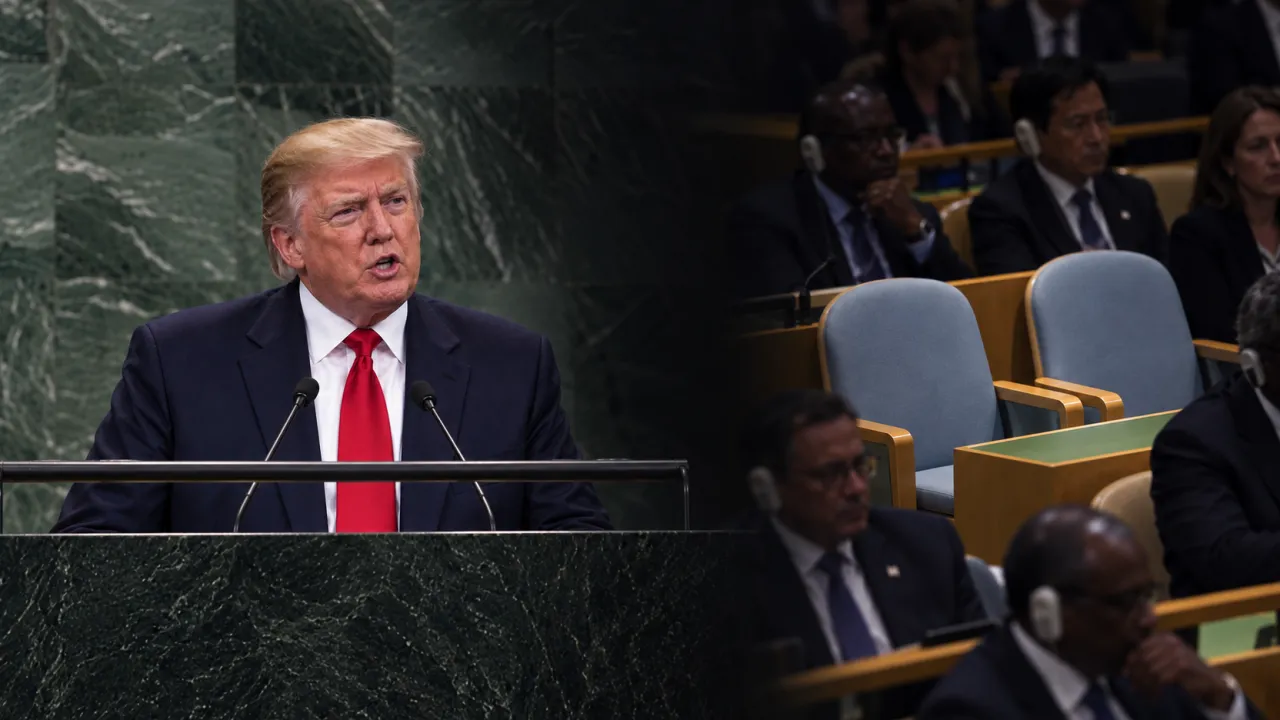
Before the UN General Assembly on Tuesday, Trump stated: "will I annihilate the Islamic Republic and do it quickly" if there is no agreement with Iran.
- 02
On September 22, a three-hour meeting between Steve Witkoff, Jared Kushner, and Iranian officials took place in New York on the sidelines of the UN, described as "very productive" by Trump.
- 03
According to the Iranian public channel cited by BBC News Türkçe, Tehran has set three conditions for the reopening of the Strait of Ormuz: lifting of the naval blockade, unfreezing of Iranian assets, and an end to the war on all fronts.
ANALYSIS
Ankara, September 23, 2026. The Turkish press took note of Donald Trump's New York speech less for its martial tone than for the diplomatic machinery that followed in the hour. On Tuesday, before the United Nations General Assembly, the American president presented as his own the decision to "annihilate" Iran: "I have a big decision to make. Will we conclude an agreement with Iran that allows it to rebuild... or will I annihilate the Islamic Republic and do it quickly, without ever giving them the chance to kill and destroy people and countries again?" he said, before adding that he believes an agreement will come "just after the elections" on November 3, Iranian leaders waiting, according to him, for the outcome.
Daily Sabah reports that Trump justified the American-Israeli military campaign against Iran as a means of preventing Tehran from acquiring nuclear weapons, an ambition that the Islamic Republic constantly denies.
It is the detailed report by BBC News Türkçe that sets the Turkish angle: on the same September 22, a three-hour meeting was held on the sidelines of the UN in New York between American emissaries, Steve Witkoff and Jared Kushner, and Iranian officials. Trump described it as "very good and very productive" without specifying who, on the Iranian side, attended. The official Iranian agency IRNA confirmed a meeting between Foreign Minister Abbas Araghchi and American emissary Witkoff, specifying that it had taken place "at the insistence" of Washington. According to the Iranian public channel, relayed on Telegram, the Iranian objective was to transmit the conditions for the reopening of the Strait of Hormuz: immediate lifting of the naval blockade, unfreezing of all frozen Iranian assets, and an end to the war on all fronts, including those of the "Axis of Resistance".
This clause on Hormuz, through which a critical part of global oil traffic passes, places the region in an equation where verbal threat and concrete negotiation progress in parallel. Turkey, Iran's direct neighbor and a regional actor exposed to any instability in the strait, takes note of this episode as confirmation that a discussion channel exists behind the rhetoric of the speech.