
DOMINANT ANGLE
Tehran denounces Trump's threat as an admission of American "strategic despair", while confirming the resumption of talks on the Strait of Hormuz and warning of harsher strikes in the event of aggression.
Dominant angle identified — does not reflect unanimity of this country’s media
KEY POINTS
- 01
The military leadership qualifies Trump's remarks as "strategic desperation" and promises strikes that are "more severe, more crushing, and less predictable".
- 02
State television confirms that Foreign Minister Abbas Araghchi met with Steve Witkoff "at the insistence of the American side", posing conditions including the lifting of the American naval blockade, the unfreezing of Iranian assets, and the end of the war on all "resistance fronts".
- 03
Trump estimated that an agreement could come after the US midterm elections, following a three-hour meeting led by Witkoff and Kushner described as "very good" and "very productive".
ANALYSIS
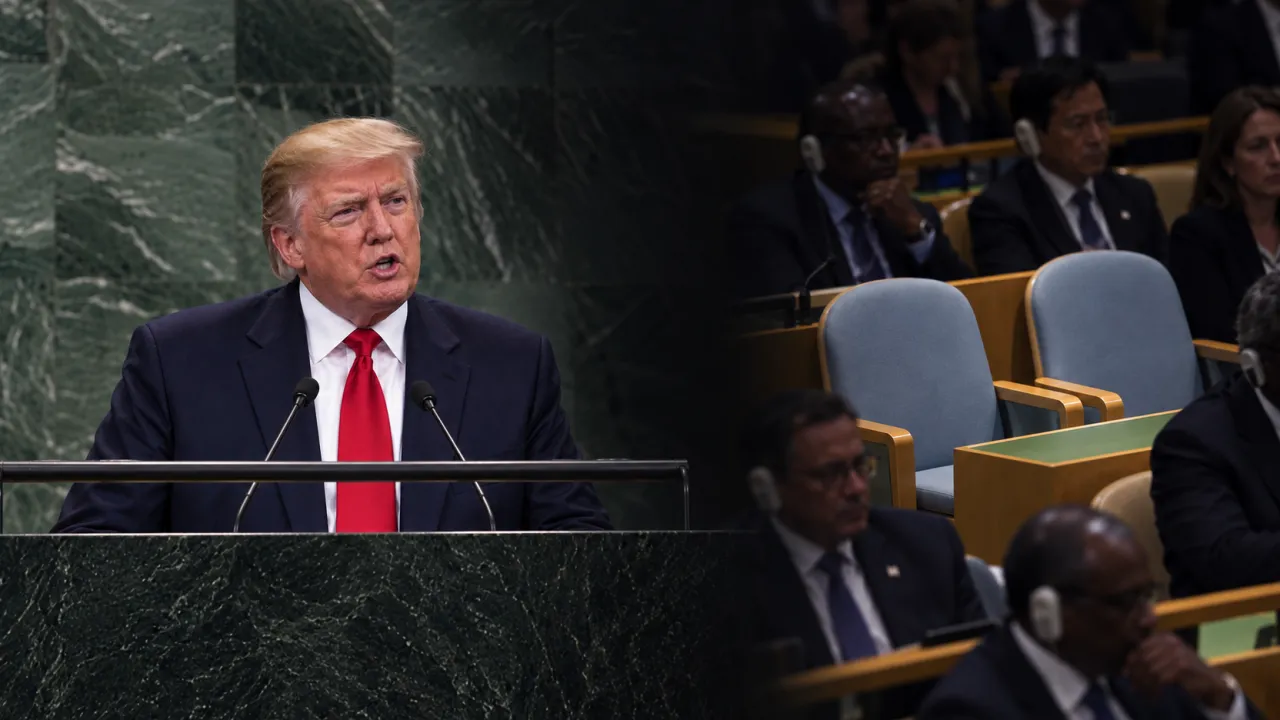
Tehran, September 23, 2026. Before the United Nations General Assembly on Tuesday, Donald Trump warned that it would be up to him to decide whether to "annihilate" Iran if no agreement is reached to end the war in the Middle East. The Iranian delegation left the room during the speech. A few minutes later, the American president announced the resumption of dialogue with Tehran, mentioning a three-hour "very good" and "very productive" meeting in New York between his envoys Steve Witkoff and Jared Kushner and an Iranian delegation, with another session in preparation. He judged that an agreement could be reached after the American midterm elections, saying he felt "a lot of momentum" towards a settlement.
The General Staff of the Armed Forces and the Khatam al-Anbiya Central Command responded in a statement relayed by Mehr News, dismissing Trump's remarks as an internal communication tool rather than a fact-based assessment. The text states that the repetition of threats, "given the exhaustion of the American army, is not a sign of power but a sign of strategic despair". It promises "more severe, more crushing and less predictable" strikes against aggressors if the United States or Israel takes action, and presents Iran as the anchor of regional security in the face of what is deemed an illegitimate American presence.
On the diplomatic channel, Iranian state television confirmed that Foreign Minister Abbas Araghchi had met with Witkoff "at the insistence of the American party" and transmitted Tehran's conditions: lifting the American naval blockade, unfreezing Iranian frozen assets, and ending the war on all "resistance fronts". An Iranian official told Reuters that the country could reopen the Strait of Hormuz, at the center of negotiations conducted through Qatar and other regional mediators, in exchange for American concessions.
For the Iranian press, these two sequences - public threat at the UN podium and discreet talks behind closed doors - illustrate an American diplomacy deemed contradictory, where the firmness displayed in front of the cameras coexists with an active search for an agreement whose calendar would be set by the American electoral calendar.