
DOMINANT ANGLE
Beijing is watching the decline in traffic in the Strait of Ormuz more than the rhetoric, seeing it as a concrete indicator of the outcome of the negotiations between Washington and Tehran.
Dominant angle identified — does not reflect unanimity of this country’s media
KEY POINTS
- 01
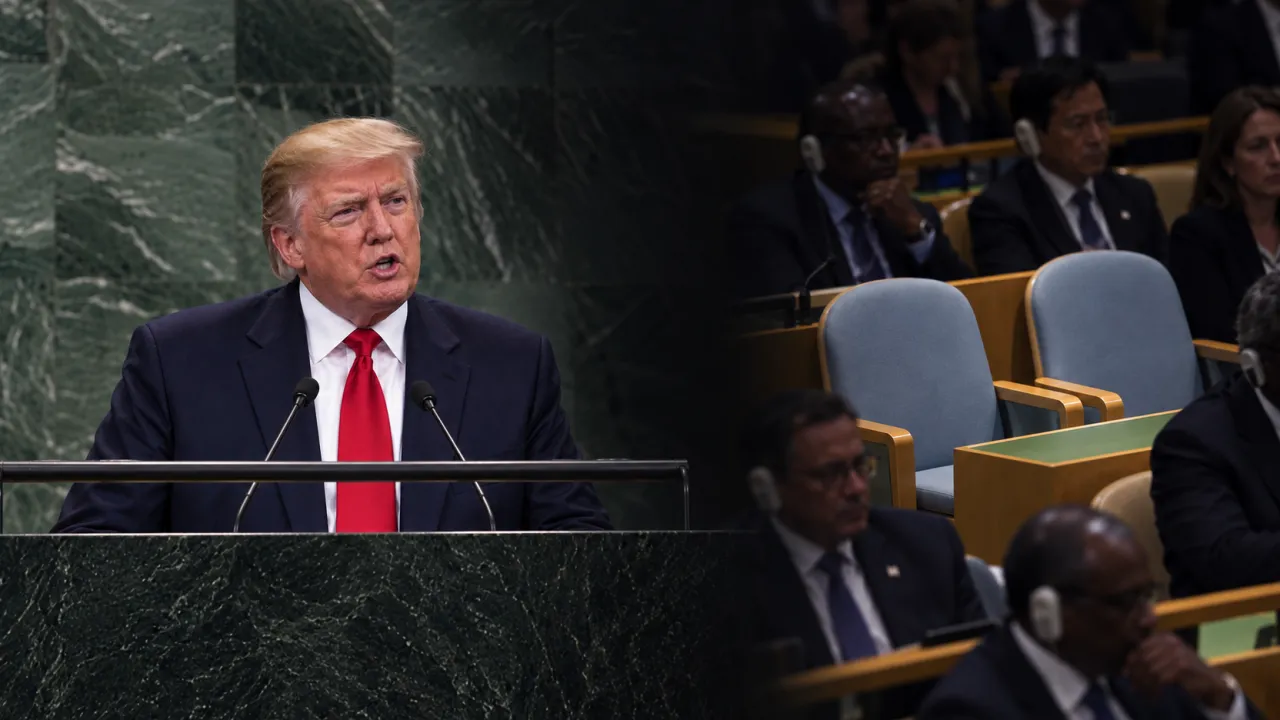
Trump warned from the UN podium that he could "wipe out the Islamic Republic" if there is no agreement, while predicting a deal after the November 3 midterms
- 02
His envoys Steve Witkoff and Jared Kushner held a three-hour meeting with Iranian officials in New York, described by Trump as "very good"
- 03
According to Kpler, only two commercial ships passed through the Strait of Ormuz on Monday, compared to ten the day before, while IRIB reports the Iranian conditions: lifting of the naval blockade, unfreezing of frozen assets, and end of the war
ANALYSIS
Beijing, September 23, 2026. Before the United Nations General Assembly on Tuesday, Donald Trump once again justified his war against Iran, claiming to have prevented Tehran from obtaining nuclear weapons and warning that he could "annihilate the Islamic Republic" if no agreement was found to end the conflict. "I will never allow Iran to have nuclear weapons," he said at the 81st session of the General Assembly, describing Tehran as the "brute of the Middle East" that "is no more." The Iranian delegation left the room within ten minutes of the speech; President Masoud Pezeshkian and Foreign Minister Abbas Araghchi, who were in New York for the session, did not attend.
A few hours later, Trump announced that his special envoys, Steve Witkoff and Jared Kushner, had held a three-hour meeting with Iranian officials on the sidelines of the UN general debate. "It was a very good meeting," he told journalists, adding: "it's either great potential or annihilation, there are two choices." He estimated that an agreement would come after the midterm elections on November 3.
On the Iranian side, the state agency IRIB, citing an exclusive source, reported that Araghchi had transmitted Tehran's "decisive positions" to the American side via Witkoff, regarding the reopening of the Strait of Hormuz: lifting the American naval blockade, unblocking frozen Iranian assets, and ending the war on all regional fronts. The maritime tracking company Kpler recorded only two commercial ships passing through the strait on Monday, compared to ten the day before — a concrete signal, for Beijing, more meaningful than the rhetoric from the podium on this vital route for global oil supplies.
On the same day, Trump presented his domestic record as a global success: "I can proudly announce that America is back, and our country is stronger today than ever," he said, citing a decline in crime, innovation, and tax cuts as benefits for the international community — a tone that the Hong Kong press considers closer to a campaign rally than a UN address.