
DOMINANT ANGLE
Buenos Aires sees the CDU's departure from the Mecklenburg-Vorpommern state parliament as a sign of Friedrich Merz's lasting weakening, rather than a German ideological shift.
Dominant angle identified — does not reflect unanimity of this country’s media
KEY POINTS
- 01
The AfD wins 38.2% in Mecklenburg-Western Pomerania, more than double the 16.7% it obtained in this state in 2021.
- 02
The CDU garners 4.9%, below the 5% threshold, and loses all representation in a state parliament for the first time in its history.
- 03
In Berlin, Die Linke comes in first with 25.7% ahead of the CDU (18.8%), while the SPD posts its worst score in this state with 12.1%.
ANALYSIS
Buenos Aires, September 21, 2026. The Argentine press first notes a figure: 4.9%. This is the score of Chancellor Friedrich Merz's CDU in Mecklenburg-Western Pomerania, below the 5% threshold for access to the regional Landtag. According to Ambito, the conservative party thus records its worst result in history and finds itself excluded from a regional parliament for the first time. In contrast, the Alternative for Germany (AfD) wins with 38.2% of the vote, according to Perfil, more than double the 16.7% obtained in the 2021 election in the same region, a progression that Ambito describes as a "crecimiento significativo".
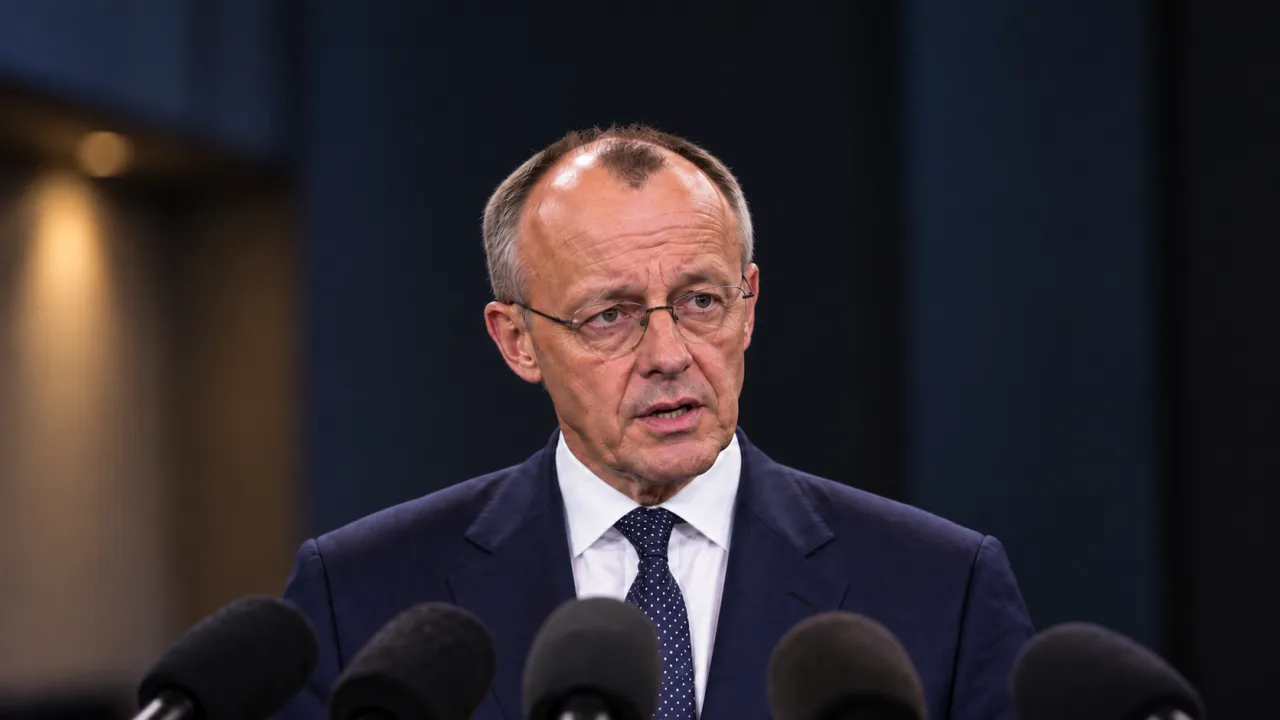
Infobae extensively quotes the chancellor's reaction, who did not try to downplay the shock: "No podemos suavizar el resultado en Mecklemburgo-Pomerania Occidental. Es un desastre," said Friedrich Merz, attributing the defeat to the growing polarization between the SPD and the AfD. The chancellor nonetheless affirmed his intention to remain in office and pursue his program of reforms, evoking a tougher and less conciliatory German society, and a decline in trust in institutions that he attributes to an "ataque activo de partidos radicales de izquierda y derecha".
The second election, in Berlin, completes the picture drawn by the Argentine media. Die Linke comes out on top with 25.7%, ahead of the CDU at 18.8%, while the SPD records its worst result in the capital with 12.1%, reports Perfil. The AfD also makes progress, at 16.1%, without however reaching its goal of becoming the leading political force in Berlin.
A common thread runs through the three accounts: the AfD's electoral breakthrough does not automatically translate into power. Perfil emphasizes that it remains without a partner willing to form a coalition, a situation already observed two weeks earlier in Saxony-Anhalt. The Argentine reading thus prioritizes the mechanics of alliances and the political future of Friedrich Merz over the sociological factors of the vote, a Germany that, in the chancellor's own words quoted by Infobae, must "repensar de raíz la libertad, la seguridad del día a día, la paz".