
DOMINANT ANGLE
Kyiv is first taking note of Berlin's internal turmoil: for the Ukrainian press, the unprecedented exclusion of the CDU from the Mecklenburg-Vorpommern Landtag and the contested retention of Friedrich Merz in power weigh, in the short term, heavier than the AfD's breakthrough itself.
Dominant angle identified — does not reflect unanimity of this country’s media
KEY POINTS
- 01
Friedrich Merz's CDU obtains 4.9% in Mecklenburg-Western Pomerania, below the 5% threshold, and will be excluded from the Landtag for the first time in its history according to preliminary official results cited by NV Ukraine.
- 02
Two weeks earlier, in Saxony-Anhalt, the AfD had garnered 43.8% of the vote with a record turnout, Kyiv Post recalls.
- 03
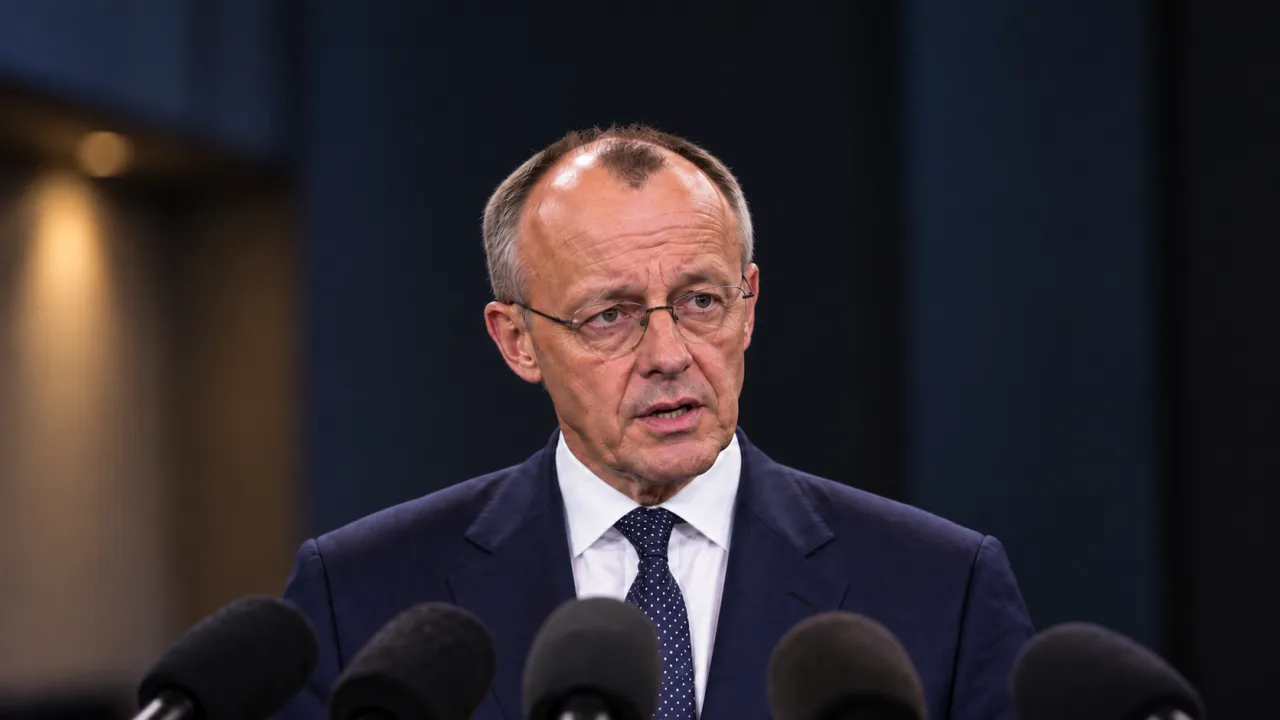
Friedrich Merz describes the result as a "catastrophe" but announces his intention to stay in office and pursue his reforms, according to NV Ukraine.
ANALYSIS
Kyiv, September 21, 2026. Ukrainian editorial offices are opening their Sunday editions with an unprecedented figure in the history of the Federal Republic: the CDU of Friedrich Merz, with only 4.9% of the votes in Mecklenburg-Western Pomerania, failed to reach the 5% threshold and, for the first time in its history, is excluded from a Landtag. Kyiv Post recalls that on the same Sunday, in Berlin, the Christian Democrats were also fighting to retain the capital, two elections presented as a high-risk test for the chancellor. NV Ukraine dedicates its dispatch to this brutal observation: "the party of German Chancellor Friedrich Merz, the CDU, did not cross the 5% threshold and will be excluded from the regional parliament of Mecklenburg-Western Pomerania," according to the preliminary official results cited by the agency.
The same media reports the chancellor's reaction, who describes this setback as a "catastrophe" while announcing his intention to remain in office and pursue his reforms. This double sequence, the admission of defeat followed by the refusal to give in, structures the Ukrainian narrative: Merz appears weakened, but not overthrown.
Kyiv Post places the election in a trajectory already underway: two weeks earlier, in another East German state, Saxony-Anhalt, the AfD had collected 43.8% of the votes, a record participation. The correspondent also describes the mobilization that came to counter this dynamic in Schwerin: a bus named "Adenauer SPR+", placards proclaiming that racism is not an alternative, others more direct against the AfD. Faced with this surge, the social democrat Manuela Schwesig, 52, who has been leading the state for nearly a decade, appears as the last local bulwark.
For the Ukrainian press, the immediate issue is not so much the progress of the far right, already documented since Saxony-Anhalt, but the question of Friedrich Merz's political survival at the head of his party and the federal government. The consulted dispatches do not dwell on the coalition scenarios in Schwerin or Berlin, and do not develop the AfD's positions on Russia or military aid to Ukraine, topics that are nonetheless sensitive in Kyiv. The narrative remains focused on the internal German duel: a chancellor who takes the hit, a historic party that recedes, a far right that confirms its progress.
SOURCES (2)
- Kyiv PostMEDIUM
- NV UkraineMEDIUM