
DOMINANT ANGLE
Berlin cuts coldly: the double election on September 20, 2026 confirms the failure of Friedrich Merz's CDU more than it consecrates the breakthrough of the AfD, and the chancellor chooses to stay rather than give up ground.
Dominant angle identified — does not reflect unanimity of this country’s media
KEY POINTS
- 01
The CDU gets 4.9% in Mecklenburg-Western Pomerania, below the 5% threshold, and fails for the first time in its history to enter a Landtag since 1949
- 02
The AfD comes in first with 38.2% (Enrico Schult), ahead of the SPD's Manuela Schwesig at 35.5%; Die Linke comes in first in Berlin with 25.3%
- 03
Friedrich Merz described the result as a "Desaster" while announcing his staying on and the continuation of reforms, ruling out the possibility of a minority government
ANALYSIS
Berlin, September 21, 2026. The CDU had never failed to win a regional election since 1949: on Sunday, September 20, 2026, it garnered 4.9% in Mecklenburg-Western Pomerania and remained outside the Schwerin Landtag, where the AfD prevailed with 38.2% ahead of Manuela Schwesig's SPD (35.5%). In Berlin, Die Linke came out on top with 25.3%, and the AfD made progress around 15%.
The Berlin press first interpreted this double vote as a signal to the federal government, not just the regional executives. Tagesschau noted that "many voters used the state election to give the federal government a wake-up call" — which served the AfD, hurt the CDU, and left the SPD almost unscathed thanks to Schwesig's personal profile, with half of the voters saying they voted for her and not for her party.
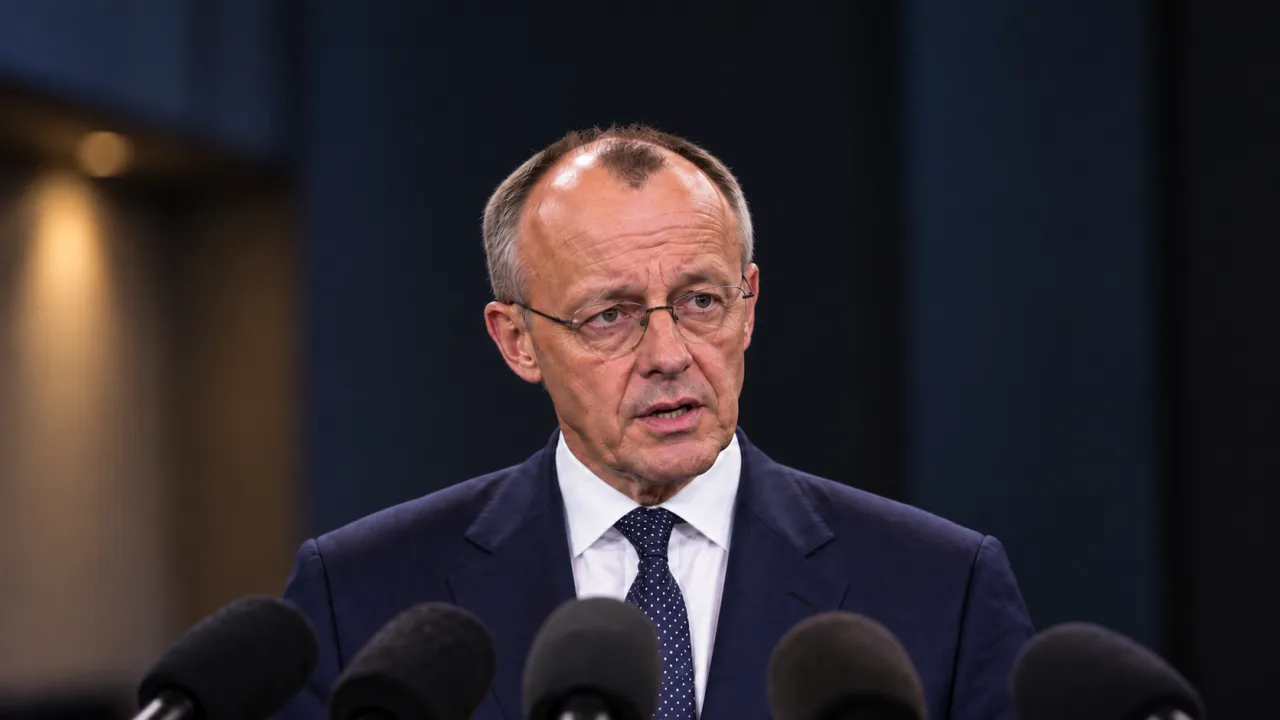
Friedrich Merz described the result as a "Desaster" on Sunday evening at the Konrad-Adenauer-Haus, citing a lack of "Rückenwind" from Berlin. He immediately ruled out any withdrawal: "I want to move our country forward," he said, promising to maintain the course of reforms he presents as "the means against the authoritarian poison." The FAZ emphasized that no demand for personal consequences had been made within the party's presidium.
The FAZ also documented, as early as Tuesday, the rumor of a CDU minority government without the SPD — a scenario that the chancellor had publicly dismissed ("I don't think much of it") and that the eight CDU minister-presidents had deemed necessary to collectively deny, a sign of internal tensions more intense than the official communication suggests.
Tagesschau also noted that the rejection of the pension reform weighs heavily: three-quarters of Mecklenburg-Western Pomerania voters want to maintain pension without deduction after 45 years of contributions, which Schwesig exploited by openly distancing herself from the federal coalition. Vice-Chancellor Lars Klingbeil (SPD) himself acknowledged that the pension issue had created "great uncertainty." Finally, historian Heinrich August Winkler, cited by the FAZ, suggested that the AfD could have reached its peak if the black-red coalition maintains its reforms, comparing the period to the years 1873.
SOURCES (2)
- FAZMEDIUM