
DOMINANT ANGLE
London is measuring the fragility of Friedrich Merz, excluded for the first time from a Landtag and targeted by rumors of replacement during his term, more than just the AfD's breakthrough.
Dominant angle identified — does not reflect unanimity of this country’s media
KEY POINTS
- 01
In Mecklenburg-Western Pomerania, the CDU fell below the 5% threshold, its worst performance in a state since World War II, according to the exit poll cited by The Independent.
- 02
In Berlin, the ARD exit poll credits the CDU with 20%, behind Die Linke at 24.5%, according to The Independent.
- 03
Merz described the result as a "disaster" for his party while announcing he would remain chancellor, promising to continue his reforms, according to the BBC.
ANALYSIS
London, Monday, September 21, 2026. The British press first notes the fragility of Chancellor Friedrich Merz, sixteen months after his arrival in power. On Sunday, two regional German elections confirmed the erosion of his party: in Mecklenburg-Western Pomerania, the CDU fell below the 5% threshold necessary to sit in the Landtag, its worst result in a state since World War II, according to the exit poll cited by The Independent. The Alternative for Germany (AfD), far-right, came out on top of the election, two weeks after its large victory in Saxony-Anhalt, where the CDU's score had already been halved.
In Berlin, the BBC and The Independent report a different shift: the CDU, given second with 20%, according to the exit poll by the public channel ARD, is overtaken by Die Linke, credited with 24.5%. The German capital could thus lose its conservative mayor.
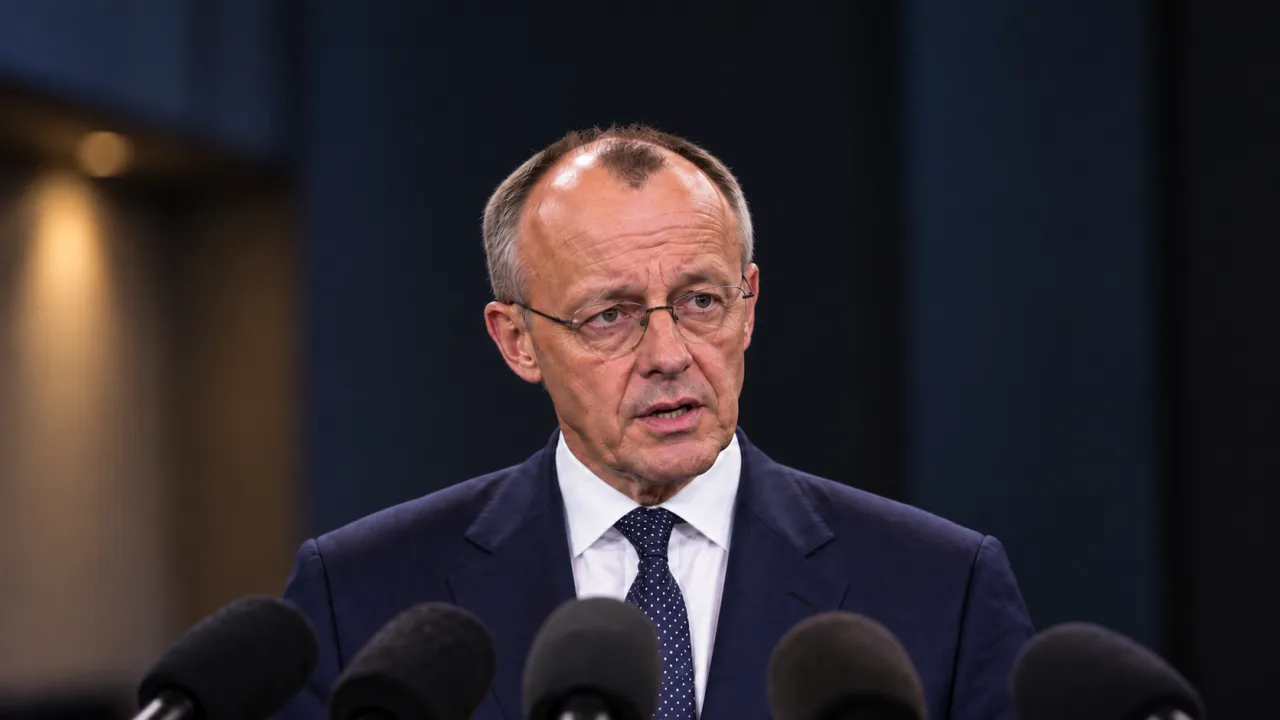
Merz described the result as a "disaster" for his party, while ruling out any idea of withdrawal. "What needs to be done now requires backbone, consistency, and patience," he said in front of the Berlin headquarters of the CDU, promising to pursue his package of economic, fiscal, and social reforms. The BBC reports that rumors of a "chancellor swap", a replacement of the chancellor during his term, have been circulating in Berlin for several weeks, even if his internal rivals remain, according to the media Tagesschau cited by the BBC, "still hesitant".
Regarding the fate of the AfD, the two titles highlight a structural limit: having come out on top in Mecklenburg-Western Pomerania, the party has no realistic path to power, as other parties refuse any coalition with it. The Independent recalls that the outgoing governor of the state, a left-wing centrist, is putting up more solid resistance than that encountered by the CDU in Saxony-Anhalt.
For the British press, the issue goes beyond Germany: it is Merz's ability to maintain his reformist course for the first European economy that is at stake, as his authority erodes election after election.
SOURCES (2)
- The IndependentMEDIUM