
DOMINANT ANGLE
Stockholm is watching the CDU's historic debacle as a sign of a deeper shift than just the AfD's breakthrough, as even Friedrich Merz himself is faltering.
Dominant angle identified — does not reflect unanimity of this country’s media
KEY POINTS
- 01
The CDU stands at 4.9% in Mecklenburg-Western Pomerania, below the 5% threshold: according to Dagens Nyheter, this is the first time in the party's history that it has not entered a regional parliament.
- 02
The AfD becomes the leading party in the state with just over 38%, two weeks after its score of nearly 44% in Saxony-Anhalt, according to Svenska Dagbladet.
- 03
In Berlin, Die Linke comes in first with around 25.5% of the vote (+13 points), ahead of the incumbent CDU at 19% (-9 points), according to Svenska Dagbladet and Aftonbladet.
ANALYSIS
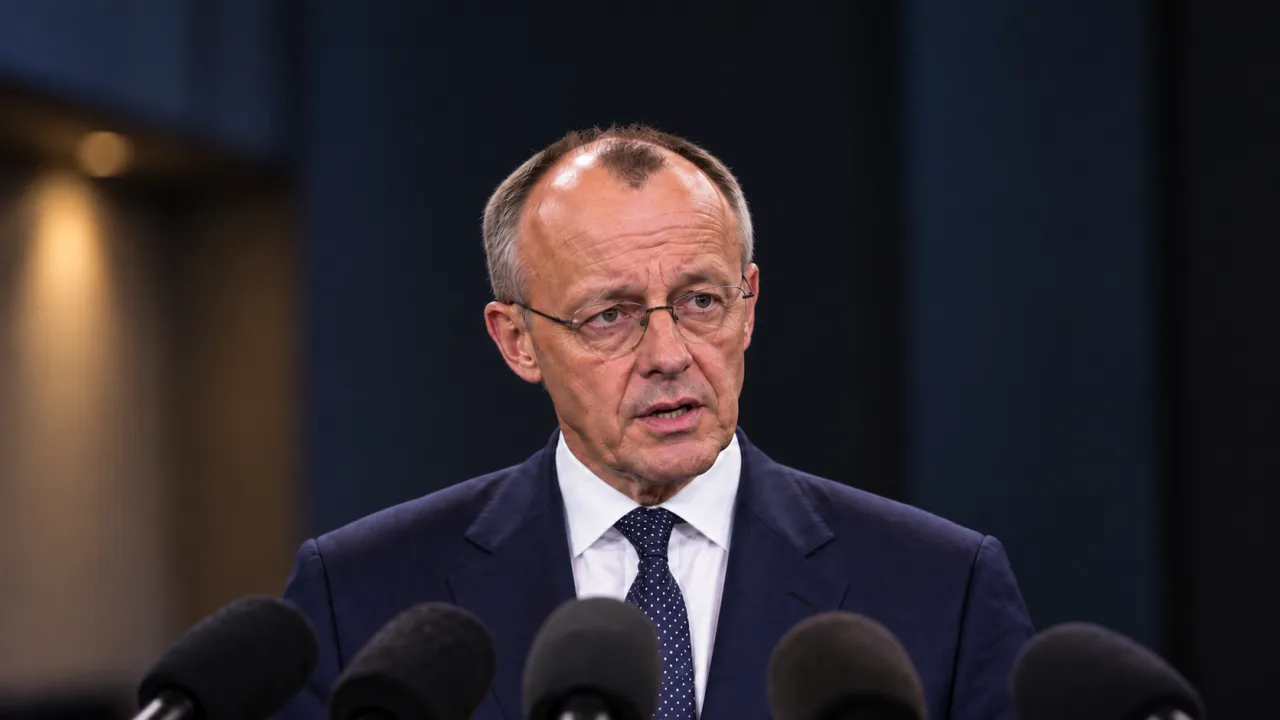
Stockholm, Monday, September 21, 2026. The Swedish press is reading the electoral rout of the CDU as an unprecedented earthquake in the history of Friedrich Merz's party. According to Dagens Nyheter, the Christian Democrats had never missed a regional parliament since their post-war founding: on Sunday, in Mecklenburg-Western Pomerania, the CDU stopped at 4.9%, below the 5% threshold required to sit. "It's the first time in the party's history that it didn't even get into a state parliament," emphasizes correspondent Anna-Lena Laurén, who recalls that the CDU was founded after World War II as a popular Christian party, Protestant and Catholic, carried by the figure of Konrad Adenauer.
Meanwhile, the Alternative for Germany (AfD) confirms its progress: it becomes the leading party in the state with just over 38%, just two weeks after its score of nearly 44% in Saxony-Anhalt, recalls Svenska Dagbladet. Friedrich Merz, for his part, has described the result as a "katastrof": "There's no way to beautify this result," he said, according to Die Zeit cited by SvD.
In Berlin, the dynamic is reversed: Die Linke comes in first with around 25.5% of the vote, up 13 points, while the outgoing CDU falls 9 points to 19%. Its lead candidate Elif Eralp hailed the victory: "In our city, love has triumphed over hate and hate rhetoric," she said, according to Aftonbladet, citing Bild. The AfD is also making progress in the capital, around 15 to 16%.
Swedish newspapers are emphasizing the personal fragility of Merz, a chancellor who was never a minister before and was long employed by American investment companies - a trajectory that, according to DN, "increasingly seems to be a hindrance to him." Despite this, he promises to continue the reforms "with stability, perseverance, and patience," after having already announced, before the vote, a decrease in gasoline prices to try to win back voters.
The Swedish reading remains focused on the internal implosion of the German Christian democracy rather than on the AfD's program itself, articulating the chancellor's personal crisis and political recomposition in the East as well as in Berlin.