
DOMINANT ANGLE
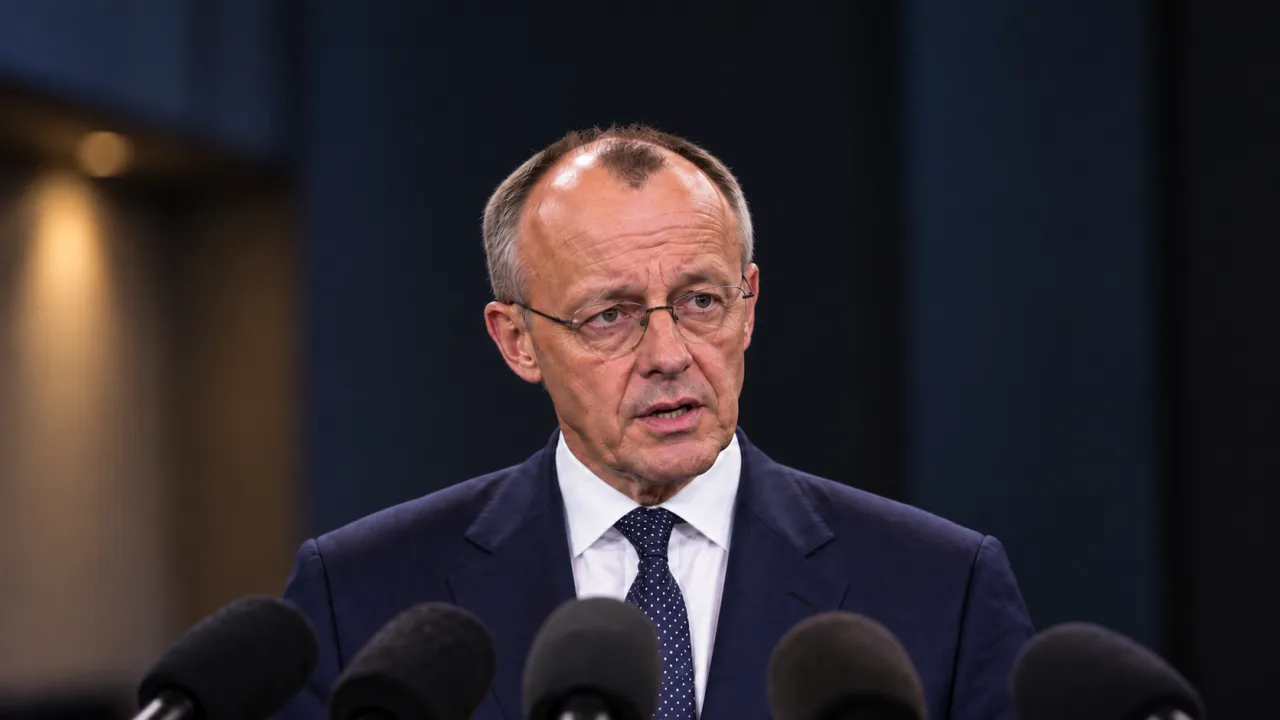
Vilnius first gauges the political weakening of Friedrich Merz, whose CDU fails for the first time in its history to enter a Landtag, before commenting on the AfD's breakthrough itself.
Dominant angle identified — does not reflect unanimity of this country’s media
KEY POINTS
- 01
The CDU gets 4.9% in Mecklenburg-Pomerania, below the 5% threshold required, its worst score since the 9% in Bremen in 1951 and its first exclusion from a Landtag in 81 years.
- 02
The AfD comes in first with 38.2% of the vote ahead of the SPD (35.5%); Die Linke (6.5%) and the Greens (5.7%) enter parliament, while Sahra Wagenknecht's alliance fails at 4.8%.
- 03
Alice Weidel says she has "ousted the CDU from its position as a popular party", but the AfD is not expected to form a regional government due to a lack of partners willing to cooperate with it.
ANALYSIS
Vilnius, September 21, 2026. The Lithuanian press first notes the extent of the setback inflicted on Friedrich Merz rather than the Alternative for Germany (AfD) victory itself. In Mecklenburg-Vorpommern, the Christian Democratic Union (CDU) garnered only 4.9% of the vote, below the 5% threshold required to sit in the Landtag. According to Kauno diena and Verslo žinios, this is the worst score in the party's history — worse than the 9% recorded in Bremen in 1951 — and the very first time in 81 years that the CDU has failed to enter a regional, European, or federal parliament. The Alternative for Germany (AfD) came in far ahead with 38.2% of the vote, ahead of the SPD (35.5%), while Die Linke (6.5%) and the Greens (5.7%) also entered the Landtag, and Sahra Wagenknecht's populist alliance also failed, with 4.8%.
Despite its victory, the AfD is not expected to come to power in the region: 15min notes that the party will remain out of power in the two voting states, due to the "firewall" that other parties maintain against it. However, its leader Alice Weidel has claimed the breakthrough: "We are the strongest force and we have reached the heart of the population," she said, adding that they have "ousted the CDU from its position as a popular party."
Friedrich Merz described the result as a "catastrophe" but ruled out any idea of withdrawal, saying he wants to pursue his package of unpopular economic and social reforms: "What needs to be done now requires courage, firmness, and patience. I will demonstrate this as CDU president and, above all, as chancellor of our country." However, the Lithuanian press relays internal CDU sources cited by the Financial Times, according to which this failure could become the catalyst for a change in the party's direction, or even the chancellor.
In Berlin, on the same Sunday, Die Linke also led the CDU and won the local elections, while the AfD made gains of around 15-16% of the vote. Lithuanian headlines note that the far-right party is gaining ground "in the former communist part" of the country, a sign of persistent regional anchorage in the East, just two weeks after its large victory in Saxony-Anhalt on September 6.
SOURCES (3)
- 15minMEDIUM
- Verslo ziniosMEDIUM
- Kauno dienaMEDIUM