
DOMINANT ANGLE
Paris is deciphering a fractured German system: the unprecedented exclusion of the CDU from the Mecklenburg-Pomerania Landtag and the simultaneous breakthrough of the AfD and Die Linke in Berlin are weakening a chancellor already undermined by record unpopularity.
Dominant angle identified — does not reflect unanimity of this country’s media
KEY POINTS
- 01
The CDU gets 4.9% in Mecklenburg-Western Pomerania, below the 5% threshold, a first in the party's history according to RFI
- 02
The AfD collects around 38% of the vote, compared to 16.7% in 2021, a jump of more than twenty-one points according to Le Monde
- 03
In Berlin, Die Linke (around 25%) leads the CDU (20%) and could win the mayor's office with its lead candidate Elif Eralp
ANALYSIS
Paris, September 21, 2026. Two regional German elections, held on Sunday in Berlin and Mecklenburg-Vorpommern, confirm to the French press the collapse of Chancellor Friedrich Merz's CDU and the entrenchment of the far right, just two weeks after the electoral earthquake in Saxony-Anhalt. In this northeastern state, bordering Poland, the Alternative for Germany (AfD) garnered around 38% of the vote, compared to 16.7% in 2021, a jump of over twenty-one points according to Le Monde. The CDU, meanwhile, plummeted to 4.9%, below the 5% threshold required to sit in the regional parliament. RFI sees this as "a first in the history of the conservative Christian Democratic party," which had controlled this region since reunification.
In Berlin, the second election confirms the fragility of the chancellor without offering any respite to the AfD. Die Linke, led by its top candidate Elif Eralp, came in first with around 25% of the vote, ahead of the CDU at 20%, potentially poised to take the mayor's office. The AfD also made gains, between 13.5% and 16%, compared to 9% in 2023. France 24 sums it up: "the bad news continues to come out of the ballot boxes for German Chancellor Friedrich Merz."
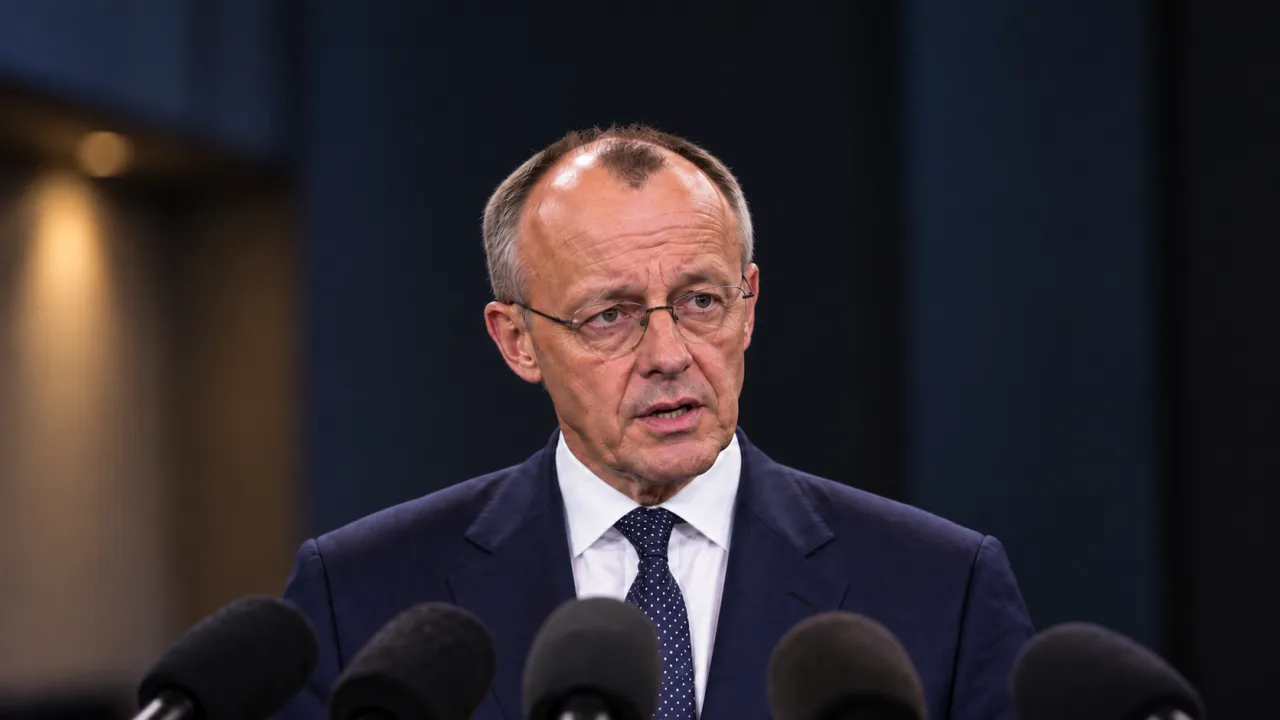
On Sunday evening, Friedrich Merz himself spoke of a "disaster," while ruling out any idea of an early departure. "I take this responsibility because I want to move our country forward," he said, according to RFI, denouncing a loss of confidence in institutions "actively undermined by radical left and right parties." The chancellor, in power for sixteen months and plagued by an unpopularity rate nearing 90%, had canceled his trip to the United Nations General Assembly to manage the aftermath of the vote.
The French press emphasizes the relaunch, by AfD co-leader Alice Weidel, of the debate on the "firewall" that excludes any coalition with her party, a consensus among traditional parties that the electoral breakthrough makes more difficult to maintain. In Mecklenburg, a left-wing alliance around the SPD's Manuela Schwesig appears best placed to retain the regional executive, with the AfD remaining excluded from any government.
These two elections add to the defeat on September 6 in Saxony-Anhalt, where the AfD had nearly achieved an absolute majority and inflicted a twenty-point setback on the CDU. For Paris, where the Franco-German couple remains the linchpin of European architecture, the continued weakening of Friedrich Merz raises questions about Berlin's ability to implement its economic reforms, as Germany remains mired in stagnation.
SOURCES (9)
- 20 MinutesMEDIUM
- Le Monde InternationalMEDIUM
- Sud OuestMEDIUM
- HuffPost FranceMEDIUM
- L'ExpressMEDIUM
- BFMTV InternationalMEDIUM