
DOMINANT ANGLE
Warsaw sees the CDU's debacle as a leadership crisis specific to Germany, with a weakened but retained chancellor, while the Polish press is relaying the Berlin debate on Friedrich Merz's future without filter.
Dominant angle identified — does not reflect unanimity of this country’s media
KEY POINTS
- 01
The AfD wins 38.2% of the vote in Mecklenburg-Western Pomerania, ahead of the SPD (35.5%), while the CDU falls to 4.9% and misses the 5% threshold for the first time in its history in a state (RMF24).
- 02
In Berlin, Die Linke comes in first with around 26% of the vote, ahead of the CDU (20%) and the AfD (13.5%); its lead candidate Elif Eralp could become the first migrant-origin mayor of the capital (Dziennik.pl).
- 03
Only 2% of 16-24 year old voters and 3% of 25-34 year olds voted for the CDU in Mecklenburg-Western Pomerania, a figure reported by RMF24 to illustrate the party's generational disconnect.
ANALYSIS
Warsaw, September 21, 2026. The Polish press closely followed the double election on Sunday, September 20, 2026, in Germany, where the Alternative for Germany (AfD) won in Mecklenburg-Vorpommern with 38.2% of the vote, ahead of the social-democratic SPD party (35.5%). The CDU of Chancellor Friedrich Merz garnered 4.9%: a result that RMF24 described as the "najgorszy rezultat w historii" (the worst result in its history), and which excluded the party from a regional parliament for the first time. According to this media outlet, only 2% of voters aged 16 to 24 and 3% of those aged 25 to 34 voted for the CDU in this state. The composition of the future Schwerin Landtag, with Die Linke at 6.5% and the Greens at 5.7%, is expected to keep Manuela Schwesig (SPD) at the head of the regional government.
In Berlin, the Polish press reported on the victory of Die Linke, credited with around 26% of the vote ahead of the CDU (20%) and the AfD (13.5%). Elif Eralp, the lead candidate for Die Linke, is presented as potentially becoming the first immigrant-born mayor of the German capital: "Od dziś wspólnie zmieniamy nasz Berlin," she said, according to Dziennik.pl, meaning "from today, we are changing our Berlin together."
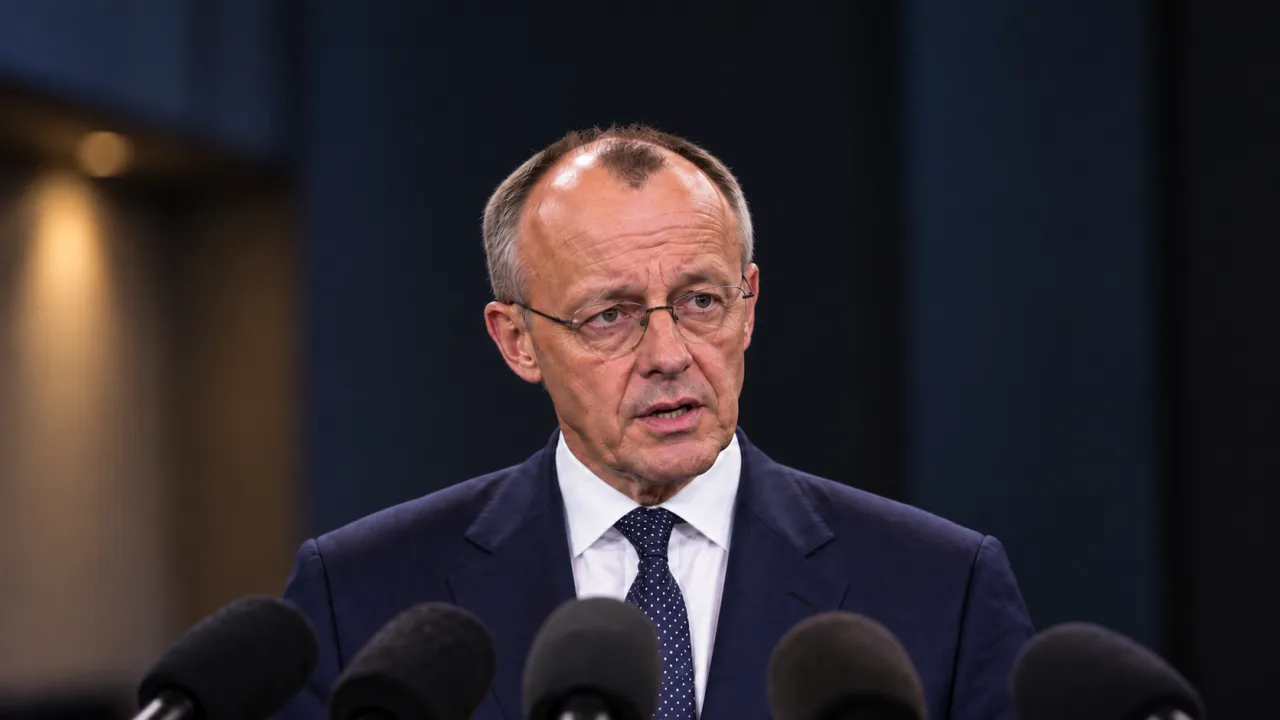
Chancellor Merz, cited by RMF24, described the result in Mecklenburg-Vorpommern as a "catastrophe" without downplaying it: "Nie możemy upiększać wyniku w Meklemburgii-Pomorzu Przednim," he acknowledged, before announcing his intention to "pchnąć nasz kraj naprzód" through reforms. The co-chair of the AfD, Alice Weidel, claimed the status of the new major popular party, in place of the CDU.
The Polish press widely reproduced the internal German debate on the future of the chancellor: Der Spiegel, cited by RMF24, warned that those in the CDU who want to oust Merz "should do it quickly, or keep quiet" ("powinien zrobić to szybko, albo zamilknąć"), while the Süddeutsche Zeitung called on leaders to "focus on good governance rather than pitting social groups against each other" and described Merz as a "kanclerz przejściowy" (transitional chancellor). Gazeta Prawna had previously noted that this election, two weeks after the CDU's defeat in Saxony-Anhalt (43.8% for the AfD on September 6), could weigh on confidence in the chancellor.
SOURCES (3)
- RMF24MEDIUM
- Gazeta PrawnaMEDIUM
- Dziennik.plMEDIUM