
DOMINANT ANGLE
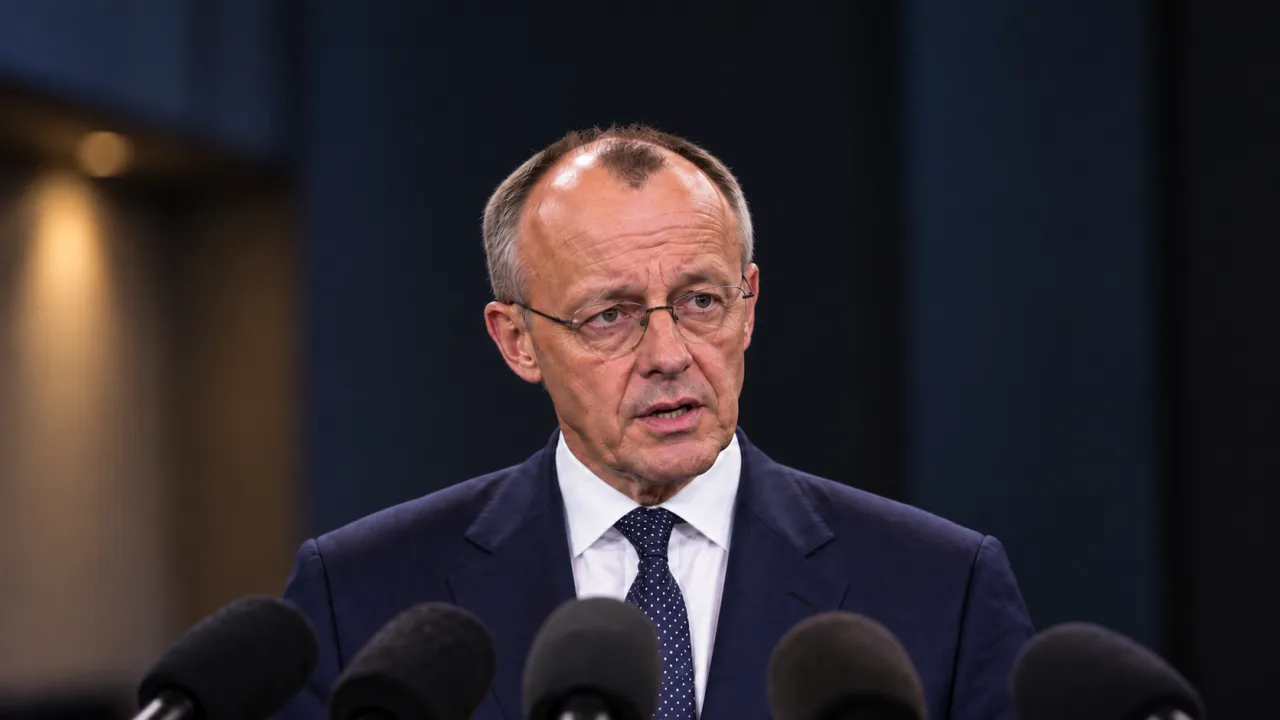
Budapest sees the CDU's debacle as a sign that the German cordon sanitaire against the far right is crumbling, and is watching Friedrich Merz's political survival.
Dominant angle identified — does not reflect unanimity of this country’s media
KEY POINTS
- 01
The AfD garnered 38.2% of the vote in Mecklenburg-Western Pomerania, narrowly surpassing the SPD at 35.5% (444)
- 02
The CDU stopped at 4.9%, below the 5% threshold, a historic first for exclusion from a Landtag for the party (444)
- 03
Friedrich Merz stated after the results: "Nem szépíthetjük a mecklenburg-elő-pomerániai eredményeket. Ez katasztrófa." (HVG)
ANALYSIS
Budapest, September 21, 2026. The Hungarian press first notes the historic scale of the CDU's debacle. According to 444, Friedrich Merz's party garnered only 4.9% of the vote in Mecklenburg-Western Pomerania, below the 5% threshold: "never before had the party failed to enter a regional parliament," the media outlet notes, recalling that the CDU's previous worst score dated back to 1951 in Bremen, with 9%. The Alternative for Germany (AfD), on the other hand, emerged victorious with 38.2% of the vote, narrowly ahead of the SPD at 35.5%, according to the figures cited by 444 — more than double its score five years ago.
Index.hu summarizes the shock in a straightforward headline: "Under Friedrich Merz, the chancellor's seat is wavering, Alice Weidel is already closing in." The media outlet sees this as confirmation of a trend that began two weeks earlier in Saxony-Anhalt, where the AfD had already achieved a historic score. Telex emphasizes the magnitude of the Christian Democratic collapse: the party has lost more than half of its voters in Mecklenburg-Western Pomerania and a third in Berlin compared to the previous election — "never in the history of the Federal Republic of Germany has the traditionally strongest party been excluded from a regional parliament," the media outlet writes.
In Berlin, where Die Linke is expected to come out on top, the Hungarian coverage remains secondary to the fate of the chancellor. HVG reports Merz's own words, spoken as soon as the polling stations closed: "We cannot sugarcoat the results of Mecklenburg-Western Pomerania. It's a catastrophe." The chancellor has nonetheless ruled out resigning, stating his intention to continue the economic reforms underway.
HVG highlights that Merz had, as a precaution, canceled his trip to the UN General Assembly in New York and convened his party in crisis mode even before the polling stations closed — a sign, according to the daily, that the Christian Democratic leadership was already anticipating the disaster. For Budapest, the question now is whether the chancellor will survive within his own camp, where voices have been raised, according to Index, to publicly question his future at the helm of the party.
SOURCES (4)
- 444MEDIUM
- Index HUMEDIUM
- TelexMEDIUM
- HVGMEDIUM