DOMINANT ANGLE
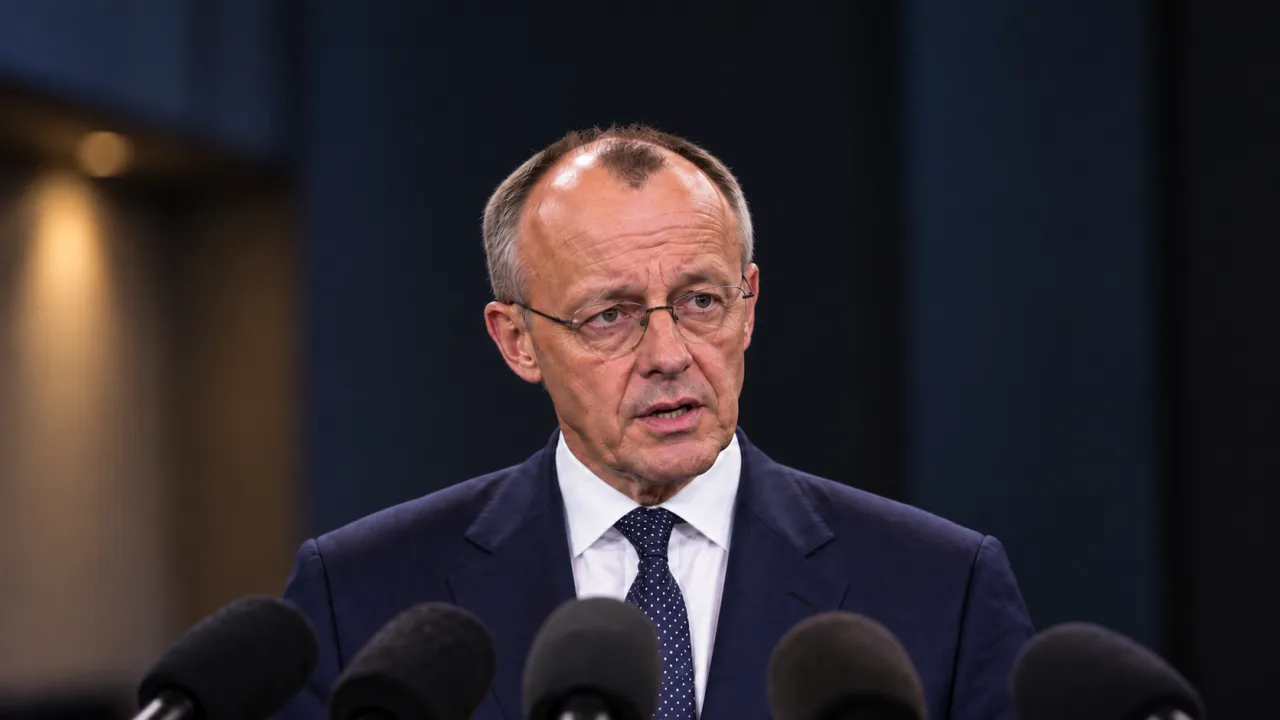
Santiago sees Friedrich Merz's debacle as a sign of a beleaguered chancellor clinging to power despite the unprecedented exclusion of the CDU from a Landtag.
Dominant angle identified — does not reflect unanimity of this country’s media
KEY POINTS
- 01
In Mecklenburg-Western Pomerania, the AfD has doubled its 2021 score to reach nearly 38%, compared to around 36% for the SPD.
- 02
Friedrich Merz's CDU, below the 5% threshold, loses all its seats in a regional Landtag for the first time in its history.
- 03
In Berlin, Die Linke comes out on top with around 25% of the vote, ahead of the CDU (19-20%), carried by its lead candidate Elif Eralp.
ANALYSIS
Santiago, September 21, 2026. The Chilean press portrays the double election in Germany on Sunday as confirmation of a traditional right wing that is running out of steam and a country fractured between two extremes. BioBioChile summarizes the scene in one phrase: Chancellor Friedrich Merz "se aferra al poder" — clings to power — despite what the media calls an "electoral disaster". In Mecklenburg-Western Pomerania, the Alternative for Germany doubled its 2021 score to reach nearly 38%, narrowly surpassing an SPD at around 36%, while the CDU collapsed below the 5% threshold and lost, for the first time in its history, all seats in a state parliament. The AfD's candidate for regional president, Leif-Erik Holm, claims a mandate to govern, but BioBioChile emphasizes that the cordon sanitaire of other parties makes this hypothesis unlikely in the absence of an absolute majority; a coalition between the SPD, Die Linke, and the Greens appears to be the most likely outcome in Schwerin.
In Berlin, the second front is also drawing Chilean attention: Die Linke won with around 25% of the vote, ahead of a CDU at 19-20%, which had governed the capital since the repeated elections of 2023. El Ciudadano presents this result as a "historic victory" that occurred "37 years after the fall of the Wall", and highlights the figure of Elif Eralp, the head of the list, described as the daughter of Turkish political refugees, whose message is summarized as promoting "love and justice" in the face of hate. The media sees this as a symbol of a new political era for the German capital, while BioBioChile focuses on the colder parliamentary arithmetic of Schwerin.
As for the fate of Friedrich Merz himself, the Chilean reading is unambiguous: the chancellor refuses to resign despite the historic collapse of his party, and announces that he will continue his reforms, presenting them as necessary for the country's future. The CDU, which had won the repeated Berlin elections in 2023, is now relegated to the background in the two states on the same Sunday. The Chilean press is less focused on the European consequences of the election — almost total silence on Ukraine or NATO — than on this internal German paradox: a weakened chancellor clinging to power, a historic right wing eliminated from a state for the first time in its history, and a radical left making simultaneous progress at both ends of the country.