
DOMINANT ANGLE
Brussels gauges how a weakened federal chancellor complicates the situation for the European Union, as Friedrich Merz rules out any premature departure despite the AfD's breakthrough in Mecklenburg-Vorpommern and the CDU's decline to Die Linke in Berlin.
Dominant angle identified — does not reflect unanimity of this country’s media
KEY POINTS
- 01
The AfD wins the regional election in Mecklenburg-Western Pomerania with 37 to 38% of the vote, ahead of the social democrats, according to exit polls conducted for German public broadcasting.
- 02
In Berlin, Chancellor Friedrich Merz's CDU is overtaken by the far-left Die Linke, according to the same estimates.
- 03
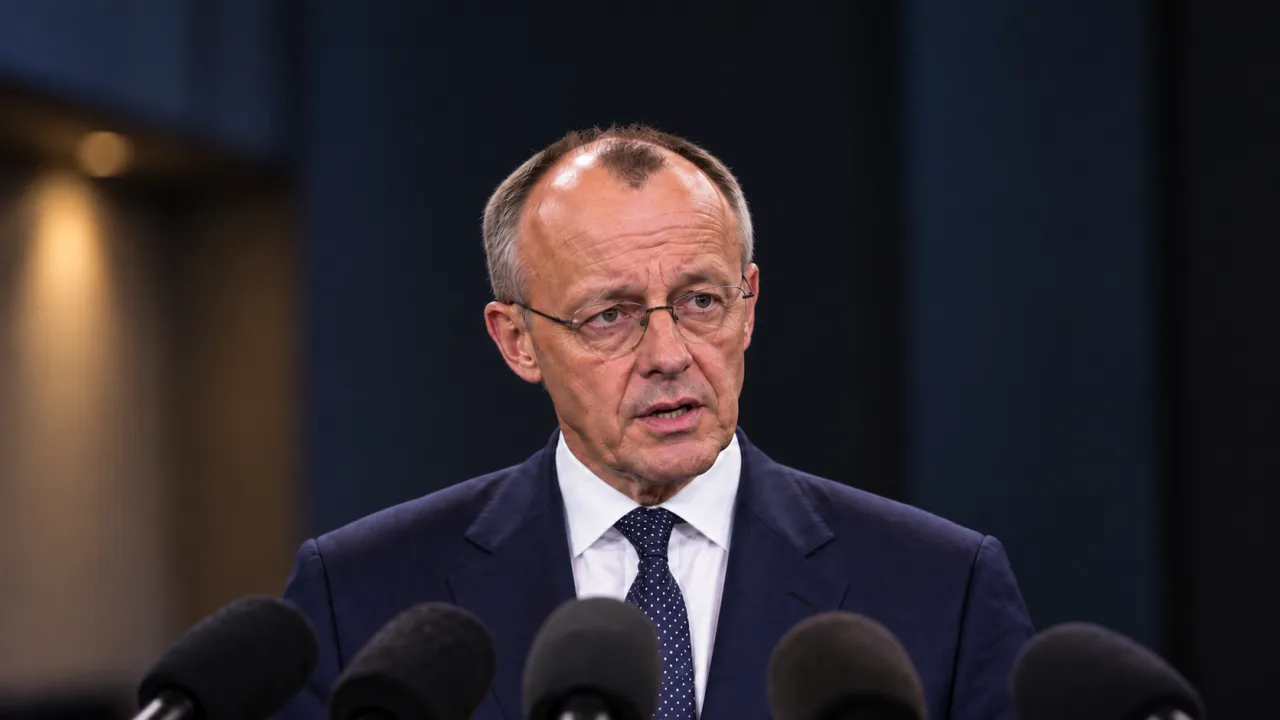
Friedrich Merz, acknowledging a "disaster" for his party (around 5% in Mecklenburg), rules out an early departure: "I'm taking this responsibility because I want to move our country forward".
ANALYSIS
Brussels, September 21, 2026. Two dispatches picked up by the Belgian press, DH and La Libre, draw the same worrying conclusion about the state of the German coalition. In Mecklenburg-Western Pomerania, the AfD is winning with 37 to 38% of the vote ahead of the social democrats, according to polls conducted at the exit of polling stations for German public audiovisual media. In Berlin, Chancellor Friedrich Merz's CDU is being overtaken by the radical left Die Linke. For the Belgian press, which closely follows the stability of the German federal government, the country's main economic partner and a pillar of the European Union, the issue goes beyond German domestic politics: a weakened chancellor complicates arbitration in Brussels, whether it's about the European budget or support for Ukraine.
Acknowledging a "disaster" for his party, which has fallen to around 5% in this state, Friedrich Merz spoke out as early as Sunday evening, a move deemed exceptional for a regional election, in order to rule out any hypothesis of premature departure, after days of speculation about his longevity in power. "I take this responsibility because I want to move our country forward," he said, while admitting that trust in institutions is "decreasing" and is being "actively undermined by radical left and right parties," a phrase that puts the AfD and Die Linke on the same level.
The Belgian press recalls that this setback comes just two weeks after a defeat in Saxony-Anhalt, which had already fueled doubts about Merz's future, who has been in office for just sixteen months. The co-leader of the social democrats and Minister of Finance, Lars Klingbeil, also a CDU ally at the federal level, has also acknowledged the significance of the election.
The Belgian treatment of the file remains descriptive for now: it relays the results and the chancellor's statements without commenting on them directly, but emphasizes what Berlin's fragility means for European balances, in a context where Germany has a significant weight on budgetary and security issues handled in Brussels.